
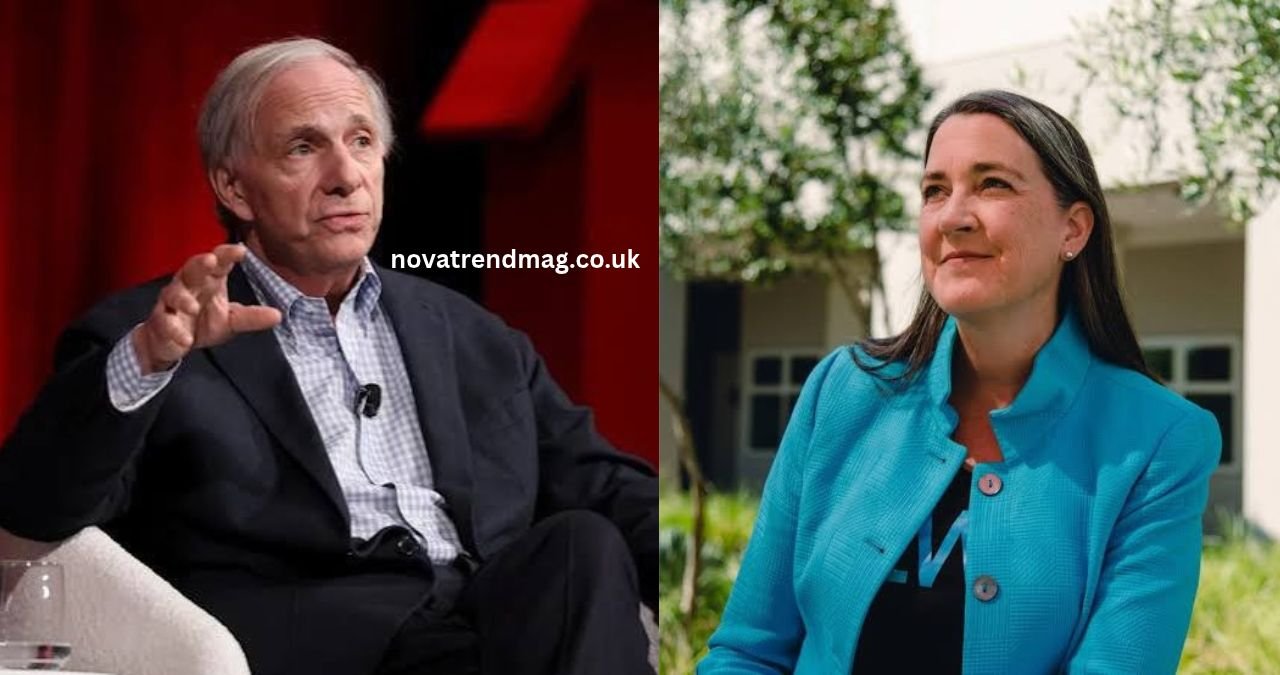

The names Ray Dalio and Patricia Poppe represent two different but influential areas of American business. Ray Dalio is internationally recognized for his achievements in investment management, economic analysis, and financial strategy, while Patricia Poppe has built her reputation through industrial leadership, energy operations, and utility management. Although their professional journeys developed in different industries, growing interest in Ray Dalio and Patricia Poppe raises an interesting question: what connects these two business figures?
Understanding their careers requires looking beyond their professional titles. Dalio developed an investment philosophy that influenced financial institutions and investors around the world. Poppe, meanwhile, established herself as an experienced executive by working across manufacturing, electricity generation, and large energy organizations. Their careers demonstrate how leadership can take different forms depending on an organization’s responsibilities, customers, and long-term objectives.
There is no established public evidence that Dalio and Poppe are relatives, personal associates, or direct business partners. However, there is an important institutional connection worth examining through Bridgewater Associates, the investment management company founded by Dalio, and PG&E Corporation, the energy company led by Poppe. This distinction provides a more accurate starting point for understanding why their names appear together in business discussions.
Who Is Ray Dalio?
Ray Dalio is an American investor, entrepreneur, author, and economic thinker best known for founding Bridgewater Associates. His career is an example of how a relatively small financial operation can develop into a major investment management organization through research, discipline, and a consistent approach to decision-making.
Dalio founded Bridgewater Associates in 1975. What began as a small operation developed into one of the world’s most recognized hedge fund organizations. His investment approach focused heavily on understanding economic cycles, studying financial markets, managing risk, and evaluating how different economic forces influence one another.
Rather than relying entirely on short-term market predictions, Dalio became known for examining the broader economic environment. Interest rates, inflation, currency movements, government debt, and international trade all became important elements of the analytical framework associated with his work.
His influence also extended beyond financial markets. Through books, interviews, research, and educational discussions, he introduced investment and management concepts to audiences who might not otherwise have studied institutional finance.
Ray Dalio’s Early Life and Professional Development
Dalio developed an interest in financial markets at a relatively young age. His early exposure to investing helped him understand how market prices respond to expectations, economic conditions, and investor behavior.
He attended college and later earned an MBA from Harvard Business School. His educational experience provided a foundation for understanding business management, finance, and organizational decision-making.
After completing his education, Dalio worked in the financial industry before establishing Bridgewater Associates. The early years of the company involved research and advisory work, allowing him to develop a deeper understanding of financial markets and the economic relationships influencing investment performance.
Building an investment organization required more than identifying profitable opportunities. Dalio also had to establish systems for evaluating information, communicating ideas, managing disagreements, and learning from mistakes.
These experiences eventually contributed to the management philosophy that became closely associated with his name.
Bridgewater Associates and Its Importance in Global Finance
Bridgewater Associates became a major part of Dalio’s professional identity. The firm developed an investment approach based on macroeconomic research and portfolio construction.
Global macro investing examines economic and political developments across different countries and markets. Instead of focusing exclusively on individual companies, investors consider broader conditions that can affect multiple asset classes.
These conditions may include inflation, monetary policy, government borrowing, economic growth, currency movements, and geopolitical developments.
One important investment concept associated with Bridgewater is the All Weather approach. It was designed around the idea that an investment portfolio should be considered in relation to different economic environments rather than depending on one particular market forecast.
The broader objective is diversification and risk management. Investors attempt to understand how different assets may respond when economic growth accelerates, inflation increases, or financial conditions become more difficult.
Dalio’s contribution to investment discussions is therefore not limited to the success of one financial organization. His ideas have encouraged investors to think more carefully about portfolio balance, economic uncertainty, and the importance of understanding risk.
Dalio stepped away from his formal leadership positions at Bridgewater over several years. His role evolved as the company transitioned toward a new generation of leadership. His continuing public identity is associated with the principles and investment ideas he developed during his career.
Who Is Patricia Poppe?
Patricia K. Poppe, commonly known as Patti Poppe, is an American business executive recognized for her leadership in the energy and utility industries.
Her career is particularly notable because she developed professional experience in several operational environments before reaching the highest levels of corporate leadership. Her background includes industrial engineering, automotive manufacturing, electricity generation, and utility management.
Poppe’s professional journey demonstrates how technical knowledge and operational experience can provide a foundation for executive leadership. Managing an energy company requires an understanding of infrastructure, safety, financial performance, customer expectations, regulation, and long-term investment.
Unlike executives whose careers develop primarily through finance or corporate strategy, Poppe gained experience in the practical operations that keep large industrial and energy organizations functioning.
Her approach to leadership has emphasized operational improvement, customer service, organizational culture, and the importance of making safety a central business priority.
Patricia Poppe’s Education and Early Career
Poppe studied industrial engineering at Purdue University, where she earned undergraduate and graduate degrees. Her education provided a technical foundation for understanding production systems, operational efficiency, and complex organizational processes.
She began her professional career at General Motors. Working in the automotive industry gave her exposure to manufacturing operations and the challenges involved in coordinating people, equipment, production schedules, and quality standards.
Manufacturing organizations depend on reliable processes. A delay in one department can affect production throughout an entire facility. Leaders must therefore understand how different parts of an operation work together.
Poppe’s experience in this environment helped develop the practical management skills that later became valuable in the energy sector.
Her subsequent career included a position at DTE Energy, where she gained experience in power generation and plant management.
This transition was important because energy operations involve a different set of responsibilities from automobile manufacturing. Electricity generation must be reliable, infrastructure requires ongoing maintenance, and operational failures can affect entire communities.
The combination of manufacturing and energy experience helped prepare Poppe for larger leadership responsibilities.
Patricia Poppe’s Leadership at CMS Energy
One of the major stages of Poppe’s career involved CMS Energy and its principal subsidiary, Consumers Energy.
She held several leadership positions within the organization, gaining experience in customer operations, engineering, distribution, and business management.
These responsibilities helped her understand the relationship between infrastructure and customer experience. Energy companies do not simply produce and distribute electricity. They must also maintain reliable service, respond to changing demand, manage costs, and operate within regulatory requirements.
Poppe eventually became president and chief executive officer of CMS Energy and Consumers Energy in 2016.
Her leadership focused on improving organizational efficiency and bringing greater attention to customer needs. She also promoted lean operating principles, which involve identifying unnecessary processes, reducing waste, and improving the way an organization delivers services.
Her experience at CMS Energy became an important part of her professional reputation and helped establish her as a senior executive in the American utility industry.
Patricia Poppe and PG&E Corporation
In January 2021, Poppe joined PG&E Corporation as chief executive officer. Her appointment came at a significant period for the company, which faced major operational, financial, safety, and public-trust challenges.
PG&E operates in a highly demanding environment. Its responsibilities include providing energy services to customers across Northern and Central California through a complex electricity and natural gas infrastructure.
The company must manage equipment maintenance, wildfire risks, infrastructure investment, regulatory obligations, and changing energy requirements.
Poppe’s previous experience in utility operations gave her a background relevant to these challenges.
Her leadership has emphasized improving safety performance, strengthening operational systems, increasing efficiency, and building customer confidence.
The company’s responsibilities also reflect broader changes affecting the energy sector. Climate conditions, renewable energy development, electrification, and increasing electricity demand are influencing how utilities plan for the future.
PG&E’s work therefore involves balancing several priorities at once: reliable service, affordable energy, environmental responsibility, and infrastructure resilience.
What Connects Ray Dalio and Patricia Poppe?
The relationship between Ray Dalio and Patricia Poppe is best understood through their professional organizations rather than an assumed personal connection.
Dalio founded Bridgewater Associates, while Poppe leads PG&E Corporation. Bridgewater has reported an investment position in PG&E Corporation through institutional securities disclosures.
This creates a documented connection between the investment management organization associated with Dalio and the energy company associated with Poppe.
However, an institutional investment holding should not be confused with a personal investment made by Dalio. Regulatory investment disclosures identify the reporting investment manager and its reported securities positions. They do not automatically establish that the founder personally selected the shares, owns the underlying economic interest, or has a direct relationship with the company’s chief executive.
This distinction is essential for accurate business reporting.
A company can hold shares in another publicly traded organization without its founder personally communicating with that organization’s management. Institutional investment decisions can also involve professional investment teams, research processes, portfolio strategies, and client accounts.
Consequently, the Bridgewater-PG&E connection is relevant when examining Ray Dalio and Patricia Poppe, but it does not prove a personal partnership or direct collaboration.
Why Bridgewater’s Investment Approach Matters
Bridgewater’s investment philosophy provides useful context for understanding why a large investment management organization might evaluate an energy company.
Energy infrastructure is an important part of the wider economy. Electricity supports manufacturing, transportation, technology, healthcare, communication, and everyday household activities.
Energy companies can therefore attract attention from institutional investors studying long-term economic trends.
However, investing in a utility company involves examining more than the general importance of electricity. Investors may consider financial performance, capital expenditure, debt levels, regulatory decisions, customer growth, operational risks, and future energy demand.
The utility sector can offer different characteristics from industries that depend heavily on consumer trends or rapid technological changes.
Nevertheless, energy investments also carry significant risks. Infrastructure projects can be expensive, regulatory decisions can affect profitability, and unexpected operational events can create substantial financial pressure.
Bridgewater’s reported interest in PG&E should be viewed within this broader investment environment rather than treated as evidence of a personal endorsement by Dalio.
How Patricia Poppe’s Leadership Reflects the Changing Energy Industry
The energy industry is experiencing a major transformation. Traditional electricity systems are being influenced by renewable energy, battery storage, electric vehicles, digital technology, and increasing demand from data centers.
Utility executives must consider how to modernize infrastructure while maintaining dependable service.
Poppe’s operational background is relevant to these challenges because energy transformation is not simply a financial or technological issue. It requires practical planning, employee training, engineering improvements, customer communication, and coordination with regulators.
For example, integrating renewable electricity into an existing power network requires careful management of supply and demand. Solar and wind generation can vary depending on weather conditions, making storage and grid flexibility increasingly important.
Utilities also need to prepare for changing consumption patterns. Electric vehicles, industrial electrification, and new digital infrastructure can increase demand for electricity.
The challenge is to ensure that infrastructure can support these developments without creating unnecessary costs or compromising reliability.
These issues demonstrate why experienced utility leadership has become increasingly important.
Ray Dalio’s Principles and Patricia Poppe’s Management Style
Although Dalio and Poppe operate in different industries, their professional experiences provide an interesting opportunity to examine two approaches to business leadership.
Dalio is widely associated with systematic decision-making, transparency, thoughtful disagreement, and learning from mistakes.
His management philosophy encourages people to examine problems objectively, question assumptions, and use evidence when making important decisions.
Poppe’s leadership experience has emphasized operational performance, customer service, organizational improvement, and safety.
Her responsibilities require an executive approach that connects management decisions with the everyday experiences of employees and customers.
The two approaches share some broader themes. Both recognize that successful organizations depend on effective systems, clear priorities, and the ability to respond to complex problems.
However, their methods should not be presented as identical. Investment management and utility operations involve different objectives, risks, and regulatory environments.
An investment manager evaluates financial opportunities and portfolio risks. A utility executive must also consider physical infrastructure, public safety, service reliability, and community responsibilities.
Comparing their careers is valuable because it shows that effective leadership depends on understanding the specific environment in which an organization operates.
The Importance of Risk Management in Both Careers
Risk management is a major theme in both financial investing and energy operations.
For Dalio, risk management has been central to investment research and portfolio construction. Financial markets can respond unexpectedly to economic developments, political decisions, interest-rate changes, and investor behavior.
A diversified investment strategy attempts to reduce excessive dependence on one economic outcome.
For Poppe, risk management has a more operational dimension. Energy infrastructure must be maintained, equipment must function safely, and electricity distribution networks must remain reliable under difficult conditions.
Wildfire exposure is particularly important for California utilities. Equipment maintenance, vegetation management, infrastructure upgrades, emergency preparation, and coordination with public authorities all contribute to managing this risk.
Although financial and operational risks are different, both demonstrate the importance of identifying problems before they become larger threats.
Effective leadership requires organizations to evaluate uncertainty, prepare for possible disruptions, and learn from previous experiences.
Why Ray Dalio and Patricia Poppe Attract Public Interest
The growing interest in Ray Dalio and Patricia Poppe reflects a wider curiosity about influential business leaders and the connections between major companies.
Dalio attracts attention because of his long career in investment management, his economic commentary, and his published ideas about markets and leadership.
Poppe attracts interest because of her executive career, her position in the energy sector, and the challenges associated with managing a major utility organization.
Their professional worlds also overlap through broader discussions about institutional investing and publicly traded companies.
Investors frequently study energy businesses because utilities play an important role in economic development. At the same time, the energy sector is increasingly relevant to conversations about technology, climate policy, infrastructure spending, and industrial growth.
When a prominent investment firm reports a holding in a company led by a well-known executive, people may naturally become interested in the connection.
The important point is to distinguish verified corporate information from assumptions about personal relationships.
Lessons Entrepreneurs Can Learn From Their Careers
The careers of Dalio and Poppe offer useful lessons for entrepreneurs, managers, and business professionals.
One important lesson is the value of continuous learning. Dalio developed his investment philosophy over decades, while Poppe built her executive experience across different industries and operational responsibilities.
Another lesson is the importance of understanding the details of a business. Successful leadership cannot depend entirely on high-level strategies. Leaders must understand how their organizations operate and where improvements are possible.
Risk management is another valuable lesson. Businesses should evaluate potential problems, understand their financial exposure, and prepare for unexpected changes.
Their careers also demonstrate that leadership is not limited to one personality type or management style. Different industries require different approaches, and effective executives adapt their methods to the responsibilities they face.
For smaller businesses, these lessons can be applied through careful financial planning, improved communication, customer-focused decisions, and regular evaluation of business performance.
The Future of Investment Management and Energy Leadership
The future creates opportunities and challenges for both investment management and the energy industry.
Global investors must continue responding to changing economic conditions, technological developments, geopolitical uncertainty, and evolving financial markets.
Economic growth, inflation, public debt, and monetary policy will remain important considerations for institutional investment strategies.
Energy companies, meanwhile, face the need to modernize infrastructure and prepare for a more electrified economy.
The growth of artificial intelligence, cloud computing, and data centers is increasing attention on electricity supply and grid capacity. Renewable energy and battery storage are also changing how electricity is generated and delivered.
These developments make the relationship between financial capital and physical infrastructure increasingly important.
Investment organizations evaluate where capital may be deployed, while energy companies determine how to build and maintain the systems needed to serve customers.
This broader relationship helps explain why the professional worlds associated with Dalio and Poppe can be discussed together even without evidence of direct personal collaboration.
Common Questions About Ray Dalio and Patricia Poppe
Are Ray Dalio and Patricia Poppe Business Partners?
There is no established public evidence confirming that Ray Dalio and Patricia Poppe are direct business partners. Their professional careers are associated with separate organizations. Dalio founded Bridgewater Associates, while Poppe leads PG&E Corporation.
Are Ray Dalio and Patricia Poppe Related?
No verified public information establishes that the two executives are relatives. Their names are connected primarily through business and institutional discussions rather than a documented family relationship.
What Is the Connection Between Bridgewater Associates and PG&E?
The connection involves institutional investment disclosures showing that Bridgewater Associates reported a position in PG&E Corporation shares. This links the organizations financially, but it does not establish a personal investment by Dalio or a direct relationship with Poppe.
What Is Ray Dalio Famous For?
Ray Dalio is best known for founding Bridgewater Associates and developing influential ideas about global macro investing, economic cycles, diversification, risk management, and organizational principles.
What Is Patricia Poppe Known For?
Patricia Poppe is known for her leadership experience in manufacturing and energy, her former role as CEO of CMS Energy, and her leadership of PG&E Corporation.
What Industries Do They Represent?
Dalio is primarily associated with investment management, hedge funds, financial research, and economic analysis. Poppe is associated with industrial engineering, electricity generation, energy distribution, and utility management.
Why Are Their Names Discussed Together?
Their names are discussed together because Bridgewater Associates, the investment company founded by Dalio, has reported a position in PG&E Corporation, where Poppe serves as chief executive. This is an institutional connection rather than proof of a direct personal partnership.
Conclusion
Ray Dalio and Patricia Poppe represent two different but important areas of American business leadership. Dalio built his reputation through investment management, economic research, and the development of Bridgewater Associates. Poppe established her reputation through industrial experience, energy operations, and executive leadership at major utility organizations.
Their careers illustrate the importance of experience, strategic thinking, operational discipline, and risk management. While their professional paths are distinct, the institutional connection between Bridgewater Associates and PG&E Corporation provides a legitimate reason to examine their names together.
The most important detail is that a reported investment position does not establish a personal relationship between the individuals involved. Accurate reporting must distinguish between an investment manager’s disclosed holdings and the personal decisions or activities of its founder.
Ultimately, the story of Ray Dalio and Patricia Poppe is an opportunity to explore how investment management and energy leadership influence the wider economy. Their individual achievements offer valuable insights into different forms of business leadership, while their institutional connection highlights the relationship between financial markets and essential infrastructure.