
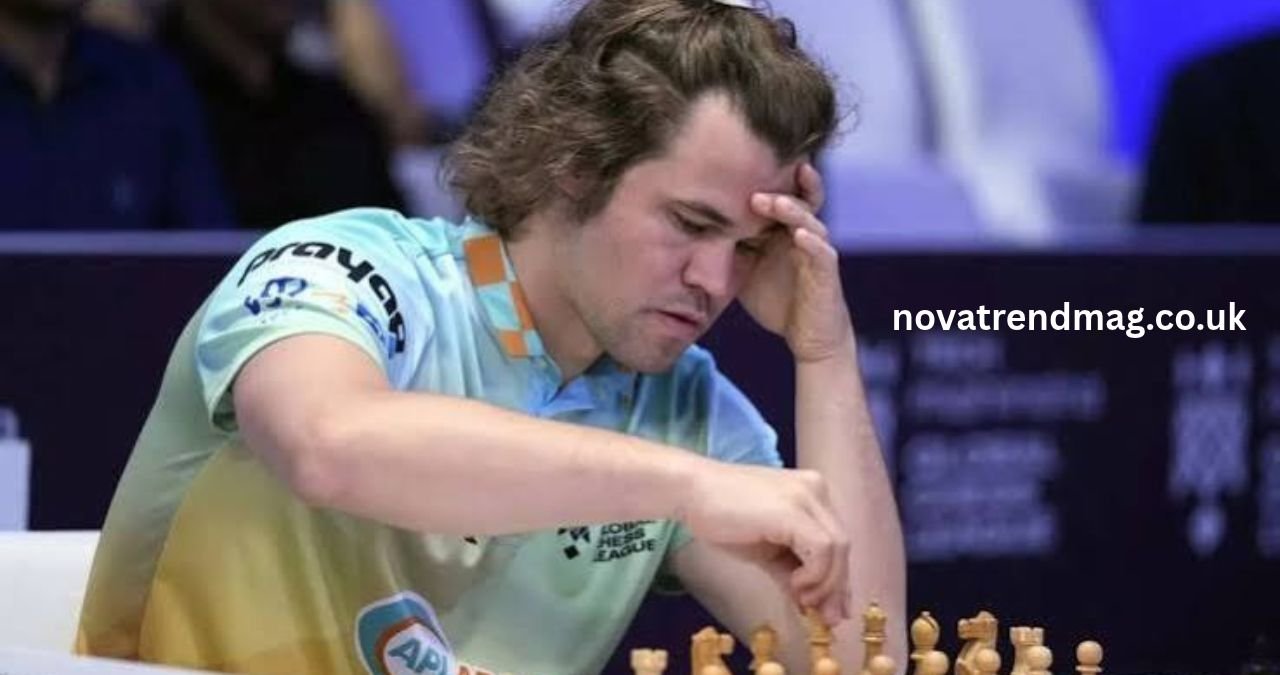

Magnus Carlsen net worth is a popular topic among chess fans, sports enthusiasts, and people interested in the financial success of world-famous athletes. Magnus Carlsen is widely regarded as one of the greatest chess players in history, but his success extends far beyond the chessboard. Through world championship victories, tournament earnings, sponsorship agreements, business ventures, and digital chess platforms, he has transformed his exceptional talent into a valuable international career.
Unlike athletes who earn most of their income through enormous professional sports contracts, Carlsen has built his financial position through several different sources. His achievements in classical chess established his reputation, while his success in rapid chess, blitz competitions, online events, and entrepreneurial projects helped him reach a broader audience.
Although estimates of Magnus Carlsen’s wealth vary, his financial success reflects more than prize money alone. His international reputation, commercial partnerships, and involvement in modern chess businesses have created opportunities that extend well beyond traditional tournament competition.
Understanding Magnus Carlsen net worth requires looking at his career from its earliest stages to his rise as a global chess superstar. His story demonstrates how extraordinary skill, consistent performance, personal branding, and business decisions can combine to create long-term financial success in a sport that has historically offered fewer earning opportunities than mainstream professional athletics.
What Is Magnus Carlsen Net Worth?
Magnus Carlsen’s exact net worth has not been publicly verified through a comprehensive financial statement. Various online estimates place his wealth in the multimillion-dollar range, with some commonly repeated estimates approaching $25 million. However, this figure should be treated as an estimate rather than a confirmed total.
His financial position is influenced by tournament winnings, endorsement income, business interests, investments, and other commercial activities. The value of private business holdings and investment portfolios is not always publicly available, making it difficult to calculate his complete wealth accurately.
Net worth is also different from annual income. A chess player might earn a substantial amount from tournaments and sponsorships during a successful year, but personal expenses, business costs, taxes, and investment performance affect how much wealth ultimately accumulates.
For Carlsen, the distinction is particularly important because he has competed at the highest level for many years. His income has come from both individual achievements and opportunities created by his worldwide recognition.
The most reliable conclusion is that Carlsen has developed substantial wealth through his chess career and commercial activities, while the exact figure remains uncertain.
Who Is Magnus Carlsen?
Magnus Carlsen is a Norwegian chess grandmaster born on November 30, 1990, in Tønsberg, Norway. His full name is Sven Magnus Øen Carlsen. He became interested in chess at a young age and quickly demonstrated an extraordinary ability to recognize patterns, calculate variations, and understand complicated positions.
His family supported his intellectual interests, and he began participating in chess competitions as a child. As his playing strength developed, he started competing against experienced opponents and attracted attention from the international chess community.
Carlsen earned the grandmaster title in 2004 when he was only 13 years old. This achievement placed him among the youngest grandmasters in chess history and signaled the arrival of a remarkable new talent.
Over the following years, he improved steadily and established himself as one of the world’s strongest players. His ability to win difficult positions, defend inferior positions, and maintain pressure against elite opponents became defining features of his playing style.
His reputation eventually extended beyond professional chess. Fans admired his practical approach, competitive personality, and ability to perform across different time controls. These qualities helped turn him into one of the most recognizable figures in the modern chess world.
How Magnus Carlsen Became a Chess Superstar
Carlsen’s financial success began with his development as a competitive player. In the early stages of his career, his primary objective was to improve his chess strength and establish himself among the world’s leading grandmasters.
His results gradually attracted international attention. He competed in major tournaments, defeated highly rated opponents, and developed a reputation for exceptional consistency.
In 2010, Carlsen became the youngest player at that time to reach the number-one position in the FIDE world chess rankings. This milestone demonstrated that he was not simply a promising young player but a serious contender for the highest honors in chess.
His rise also coincided with growing interest in online chess, streaming, and digital sports entertainment. As chess became more accessible through online platforms, internationally recognized players gained new opportunities to connect with fans.
Carlsen’s success on the board gave him an advantage in this changing environment. His achievements attracted tournament organizers, sponsors, media companies, and businesses looking to associate their brands with a successful and recognizable athlete.
The combination of sporting excellence and expanding commercial opportunities became an important foundation of his wealth.
World Chess Championship Victories and Their Financial Impact
One of the most important milestones in Magnus Carlsen’s career was winning the World Chess Championship in 2013. He defeated Viswanathan Anand in Chennai, India, to become the classical world champion at the age of 22.
Winning the championship elevated his professional status and increased his visibility among international audiences. World championship matches attract significant media coverage, sponsorship interest, and attention from the broader sporting community.
Carlsen successfully defended his classical world title in 2014, 2016, 2018, and 2021. Each successful defense reinforced his reputation as one of the strongest players of his generation.
World championship competitions offer substantial prize funds compared with many ordinary chess tournaments. The amount a player receives depends on the event’s prize structure, contractual arrangements, and final result.
However, the financial value of a championship extends beyond the immediate prize. A world champion becomes a more attractive candidate for commercial partnerships, special appearances, promotional campaigns, and invitations to prestigious events.
Carlsen announced in 2022 that he would not defend his classical world championship title in the next cycle. This decision did not mean that he was retiring from chess. Instead, he continued competing in elite tournaments and other formats, including rapid and blitz chess.
His decision also demonstrated that professional success does not necessarily require pursuing every available title. Carlsen could continue using his reputation and competitive abilities to pursue opportunities that matched his interests.
Tournament Prize Money: A Major Source of Income
Tournament winnings are an important part of Magnus Carlsen net worth. Professional chess players earn prize money by competing in tournaments that reward performance, final standings, or specific achievements.
Carlsen has participated in some of the most prestigious competitions in international chess. His victories in elite tournaments have generated substantial earnings over the course of his career.
Classical chess events generally involve longer games and more extensive preparation. Rapid and blitz tournaments require faster decision-making and different practical skills. Carlsen’s strength across these formats has allowed him to compete for prizes in a wide range of events.
His record in rapid and blitz chess is especially important because these formats attract large audiences and are well suited to online broadcasting. Events can feature multiple rounds in a single day, creating an exciting viewing experience for spectators.
Prize money varies considerably between tournaments. A major international event may offer a large total prize fund, while a smaller competition may provide more modest rewards. A player’s actual earnings depend on the tournament’s rules and finishing position.
It is also important to remember that tournament winnings are not the same as personal profit. Professional players spend money on travel, accommodation, training, preparation, and other career-related expenses.
Nevertheless, Carlsen’s ability to compete successfully over many years has helped him build a strong financial foundation.
Sponsorships and Brand Partnerships
Sponsorships represent another important potential source of income for a chess star of Carlsen’s stature. Businesses often seek partnerships with successful athletes because their reputations can help companies reach new audiences and strengthen their public image.
Carlsen’s achievements, international recognition, and association with intellectual competition make him an appealing figure for brands interested in technology, finance, lifestyle products, and sports-related audiences.
One of his notable historical commercial associations was with G-Star RAW, the Dutch clothing brand. His participation in fashion campaigns helped demonstrate that his public identity could extend beyond traditional chess audiences.
Such partnerships can provide income through campaign fees, appearances, promotional agreements, and other contractual arrangements. The exact terms of individual sponsorship agreements are generally private, so it is not possible to calculate their full contribution to his wealth from public information alone.
Brand partnerships also create opportunities to expand an athlete’s audience. A campaign featuring a chess champion can introduce the player to people who might not regularly follow competitive chess.
For Carlsen, this broader visibility supports his position as both a sports champion and a recognizable public figure. His brand value is connected not only to his tournament results but also to his reputation, personality, and ability to attract attention across different markets.
Business Ventures and Entrepreneurial Activities
A major difference between Carlsen and many traditional professional chess players is his involvement in chess-related business initiatives. These activities create opportunities to earn revenue outside direct competition.
Carlsen has been associated with businesses and projects designed to make chess more accessible, entertaining, and commercially sustainable. His involvement reflects a wider change in the chess industry, where digital platforms, media partnerships, and online competition have become increasingly important.
Entrepreneurial activity can create a different type of financial opportunity from tournament earnings. A player who wins a competition receives a prize, while a business owner may benefit from the long-term growth of a company.
However, business ownership also introduces risk. A company’s success depends on revenue, expenses, market competition, management decisions, and the ability to attract customers or investors.
The value of an entrepreneur’s stake is not necessarily equal to cash in the bank. Private company shares may be difficult to value, and their worth can change as a business develops.
Carlsen’s commercial activities therefore represent a potentially important part of his overall financial profile, although the exact value of his private interests is not fully established in the public domain.
Play Magnus and the Growth of Digital Chess
One of Carlsen’s best-known entrepreneurial ventures was Play Magnus, a company built around chess education, digital playing experiences, and technology.
The business sought to bring chess to a wider audience by using digital products that could help people learn the game and play against computer opponents. This approach connected Carlsen’s personal reputation with a growing market for online chess education and entertainment.
The Play Magnus Group later expanded its portfolio through chess-related services and acquisitions. In 2022, Chess.com announced an agreement to acquire Play Magnus Group, a significant development in the commercial evolution of online chess.
The transaction illustrated the growing value of digital chess businesses and the importance of established brands, user communities, educational tools, and online competition.
It is important, however, not to assume that the entire value of a company’s acquisition went directly to Carlsen. The financial outcome for any individual shareholder depends on ownership percentages, shareholdings, transaction terms, taxes, and other contractual details.
Even so, his association with Play Magnus helped position him as more than a professional player. It demonstrated his interest in building products and services around the game that made him famous.
This entrepreneurial experience also illustrates how a leading athlete can participate in the growth of an industry rather than relying exclusively on competitive earnings.
Online Chess and Digital Entertainment
Online chess has become a major part of the modern chess economy. Players can compete against opponents worldwide, participate in tournaments, watch professional matches, and study games without traveling to physical venues.
Carlsen’s reputation has helped him attract attention in this environment. His online appearances and participation in digital competitions have connected him with audiences who consume chess through streaming platforms, video content, and social media.
Online chess also offers commercial opportunities through advertising, memberships, sponsorships, premium features, and event broadcasting. Players who attract large audiences may receive invitations to promotional events or collaborative projects.
However, online popularity does not automatically translate into a specific amount of personal income. Revenue depends on contractual arrangements, platform policies, audience engagement, and the structure of each project.
Carlsen’s broader appeal gives him an advantage because fans may follow his games across classical, rapid, and blitz formats. His involvement in digital chess also supports the visibility of his business activities and commercial partnerships.
The expansion of online chess has helped transform the game into a form of entertainment that can reach millions of people without requiring a traditional stadium or physical audience.
How Magnus Carlsen Earns Money Beyond Playing Chess
Magnus Carlsen’s professional career illustrates how a world-class athlete can create several connected income streams. Tournament earnings remain an important part of his career, but his opportunities are not limited to winning games.
Commercial appearances, media projects, sponsorships, business interests, and chess-related products can all contribute to the financial success of a player with a strong international reputation.
A champion may also receive invitations to exhibitions, special events, interviews, and promotional activities. Such opportunities can provide income while helping the player maintain a visible public profile.
Business ventures can generate revenue independently of whether the founder is currently competing in a tournament. A chess platform, for example, may serve users throughout the year, while an individual tournament offers earnings tied to a particular event.
This distinction is particularly important when evaluating long-term wealth. A player who builds a recognizable brand and participates in businesses may have more ways to earn money than someone who depends entirely on tournament results.
Carlsen’s career combines these different elements, although publicly available information does not establish the precise amount earned through every category.
Magnus Carlsen’s Playing Style and Commercial Appeal
Carlsen’s playing style has played a significant role in his popularity. He is known for his exceptional endgame technique, positional understanding, patience, and ability to create winning chances from positions that appear equal.
Rather than relying exclusively on spectacular tactical combinations, he frequently wins through sustained pressure and accurate decision-making. His opponents often face difficult practical problems even when the position looks balanced.
This approach has helped him maintain elite performance over an extended period. Consistency is especially valuable in professional sports because a long record of success can strengthen an athlete’s reputation.
His competitive personality also contributes to his appeal. Spectators enjoy watching players who demonstrate confidence, creativity, and the ability to perform under pressure.
From a commercial perspective, these characteristics make Carlsen an attractive representative for businesses seeking to associate themselves with strategic thinking, discipline, intelligence, and excellence.
His public image connects chess with qualities that are relevant to many industries, including technology, education, and business. As a result, his influence extends beyond people who follow chess tournaments closely.
Magnus Carlsen Compared With Other Chess Grandmasters
Comparing Carlsen’s wealth with that of other grandmasters requires caution because reliable financial disclosures are uncommon in professional chess.
Garry Kasparov, Viswanathan Anand, Hikaru Nakamura, and other prominent players have developed their careers through different combinations of tournament success, coaching, books, commentary, sponsorships, and business activities.
Some players earn a significant share of their income from streaming and online entertainment. Others focus on competitive chess, coaching, speaking engagements, or educational content.
Carlsen’s distinction lies in the combination of sustained elite results, world championship success, commercial recognition, and entrepreneurial involvement. These factors provide multiple ways to create financial value.
However, the highest tournament rating or greatest number of titles does not necessarily identify the wealthiest player. Financial success depends on business ownership, commercial opportunities, spending, investments, and other factors that are not directly measured by chess performance.
It is therefore more useful to compare the different ways elite players build their careers than to treat unofficial net worth rankings as definitive financial records.
The Role of Chess Popularity in His Wealth
The popularity of chess has changed considerably during Carlsen’s career. Online platforms have made the game easier to access, while livestreams and video creators have introduced it to new generations.
Major online tournaments can attract audiences from many countries. Shorter formats are particularly suited to digital viewing because they produce frequent decisive moments and allow viewers to follow several games in a limited period.
Carlsen has benefited from this broader environment because he was already an established champion when online chess expanded rapidly.
His reputation gives audiences a reason to watch his games, while his participation in digital events helps introduce him to new viewers. This creates a connection between sporting success and commercial visibility.
The growing chess audience also benefits tournament organizers, streaming services, educational platforms, and sponsors. As the industry develops, leading players may gain access to additional opportunities.
Nevertheless, the financial results of this growth are not guaranteed. Audience size, sponsorship demand, platform economics, and market conditions can change. Carlsen’s long-term commercial success will depend partly on how effectively he adapts to those changes.
Investments, Assets, and Financial Management
Discussions of Magnus Carlsen net worth often focus on tournament prizes and estimated business earnings, but overall wealth also depends on assets, liabilities, and financial management.
Assets can include cash, investments, property, and ownership stakes in businesses. Liabilities may include debts, contractual obligations, and other financial commitments.
A person’s net worth is calculated by subtracting liabilities from total assets. For someone involved in private businesses, obtaining a reliable valuation can be especially difficult because shares may not have a readily available market price.
There is no complete public breakdown of Carlsen’s personal investment portfolio, property holdings, or private financial obligations. Consequently, claims about specific assets should be treated cautiously unless supported by reliable disclosures.
Professional athletes also face financial considerations that differ from those of ordinary salaried employees. Their income can fluctuate with performance, sponsorship demand, health, career choices, and market conditions.
Diversifying income sources can help reduce dependence on any single opportunity. Carlsen’s involvement in several areas of the chess industry illustrates one approach to building a career that extends beyond tournament participation.
Why Magnus Carlsen’s Net Worth Is Difficult to Calculate
Estimating the wealth of a private individual is challenging when detailed financial statements are not publicly available. This is especially true for athletes whose income comes from a mixture of public prize funds and private agreements.
Tournament results may reveal prize money, but they do not necessarily show the full amount retained after taxes and expenses. Sponsorship agreements may remain confidential, and business ownership may involve complex share structures.
A company’s announced acquisition price also does not automatically establish an owner’s personal profit. Ownership percentages, debt, transaction costs, and other arrangements can influence the final amount received by individual shareholders.
Investment values can change over time, while personal spending and tax obligations affect the wealth that remains.
For these reasons, estimates of Carlsen’s fortune should be viewed as approximations rather than audited figures. A responsible discussion distinguishes confirmed career achievements from financial estimates that cannot be independently verified.
This approach offers readers a more accurate understanding of his financial success without presenting speculation as established fact.
What Makes Magnus Carlsen Financially Successful?
Carlsen’s financial success is connected to a combination of extraordinary skill, long-term consistency, global recognition, and entrepreneurial interest.
His competitive achievements established credibility. Winning major tournaments and world championships helped him become one of the most recognizable figures in chess.
His reputation then created commercial opportunities. Sponsors and businesses can benefit from association with a successful champion, particularly when the athlete appeals to audiences across different countries.
His involvement in digital chess businesses added another dimension to his career. Rather than depending entirely on competition, he became associated with projects that aimed to expand access to the game and develop its commercial potential.
Timing has also mattered. Carlsen’s career has overlapped with the expansion of online chess, digital broadcasting, and internet-based learning. These developments created new ways for chess to reach audiences and generate revenue.
None of these factors guarantees wealth on its own. Their importance comes from the way they reinforce one another: sporting success increases recognition, recognition creates opportunities, and business involvement can help turn those opportunities into longer-term financial value.
The Future of Magnus Carlsen’s Wealth
The future of Carlsen’s financial position will depend on several factors, including his continued involvement in competitive chess, the development of his business interests, and the strength of the global chess market.
Even if his competitive schedule changes, his reputation is likely to remain an important professional asset. Experienced champions can contribute through exhibitions, commentary, educational projects, media appearances, and other activities connected to their expertise.
Digital chess also continues to provide opportunities for new products, tournaments, and partnerships. The long-term value of these opportunities will depend on user engagement, commercial demand, competition, and effective business management.
Carlsen may also choose to focus on projects that interest him personally rather than pursuing every available tournament. Such decisions can shape both his public profile and his earning opportunities.
It is impossible to predict a precise future net worth figure without reliable information about his assets, business interests, and financial decisions. However, his established reputation and diversified career provide several potential paths for continued professional activity.
His long-term legacy may therefore include not only his achievements as a player but also his contribution to the business and digital development of chess.
Frequently Asked Questions About Magnus Carlsen Net Worth
What is Magnus Carlsen net worth in 2026?
There is no publicly verified figure establishing Magnus Carlsen’s exact net worth in 2026. Some online estimates place his fortune near $25 million, but estimates differ and should not be treated as audited financial information. His wealth is associated with tournament winnings, sponsorships, business activities, and other professional opportunities.
How does Magnus Carlsen make his money?
Carlsen earns money through competitive chess, tournament prize funds, commercial partnerships, appearances, and business interests connected to chess. His involvement in digital chess initiatives has also helped expand his career beyond playing tournaments.
Did Magnus Carlsen become rich through chess tournaments alone?
No. Tournament success is an important part of his career, but his international reputation has created opportunities in sponsorships, media, and entrepreneurship. His association with Play Magnus is a notable example of his involvement in chess-related business.
Is Magnus Carlsen a billionaire?
There is no credible public evidence establishing Magnus Carlsen as a billionaire. Available estimates generally describe him as a multimillionaire, although his exact personal wealth has not been publicly confirmed.
Did Magnus Carlsen make money from Play Magnus?
Carlsen was associated with the Play Magnus business, which developed digital chess products and services and later became part of an acquisition by Chess.com. The amount of money he personally received, if any from particular transaction arrangements, cannot be reliably established without detailed information about his ownership and the deal terms.
Does Magnus Carlsen still earn money after giving up the classical world championship title?
Yes. Choosing not to defend the classical world championship did not mean ending his professional chess career. He continued participating in competitive chess, including rapid and blitz events, and remained involved in commercial and chess-related activities.
Why is Magnus Carlsen so popular?
Carlsen is popular because of his extraordinary chess ability, world championship achievements, consistent performance, and recognizable public image. His participation in online chess and his broader commercial activities have also helped introduce him to audiences beyond traditional chess fans.
Is Magnus Carlsen the richest chess player?
There is no definitive, publicly verified ranking that establishes the wealthiest chess player. Net worth estimates for grandmasters are often based on incomplete information, and business ownership, investments, sponsorships, and other private earnings make comparisons difficult.
Conclusion
Magnus Carlsen net worth reflects the financial opportunities that can emerge when exceptional talent meets global recognition and entrepreneurial thinking. His rise from a gifted young Norwegian player to a multiple-time world champion created the foundation for a successful international career.
Tournament winnings and world championship achievements established his reputation, while sponsorships, commercial appearances, digital chess, and business ventures expanded his earning potential. His involvement in Play Magnus demonstrated that his ambitions extended beyond competition and into the development of chess as a modern digital industry.
Although estimates sometimes place his wealth near $25 million, his exact net worth remains unverified. The absence of complete public financial disclosures means that any precise figure should be treated as an estimate rather than a confirmed fact.
Ultimately, Carlsen’s financial story is about more than money. It illustrates how long-term excellence, adaptability, strategic thinking, and the ability to recognize new opportunities can create a career with influence beyond the original field of expertise. His achievements have helped shape modern chess, and his legacy will likely be measured by both his extraordinary performances at the board and his contribution to the game’s growing international popularity.