
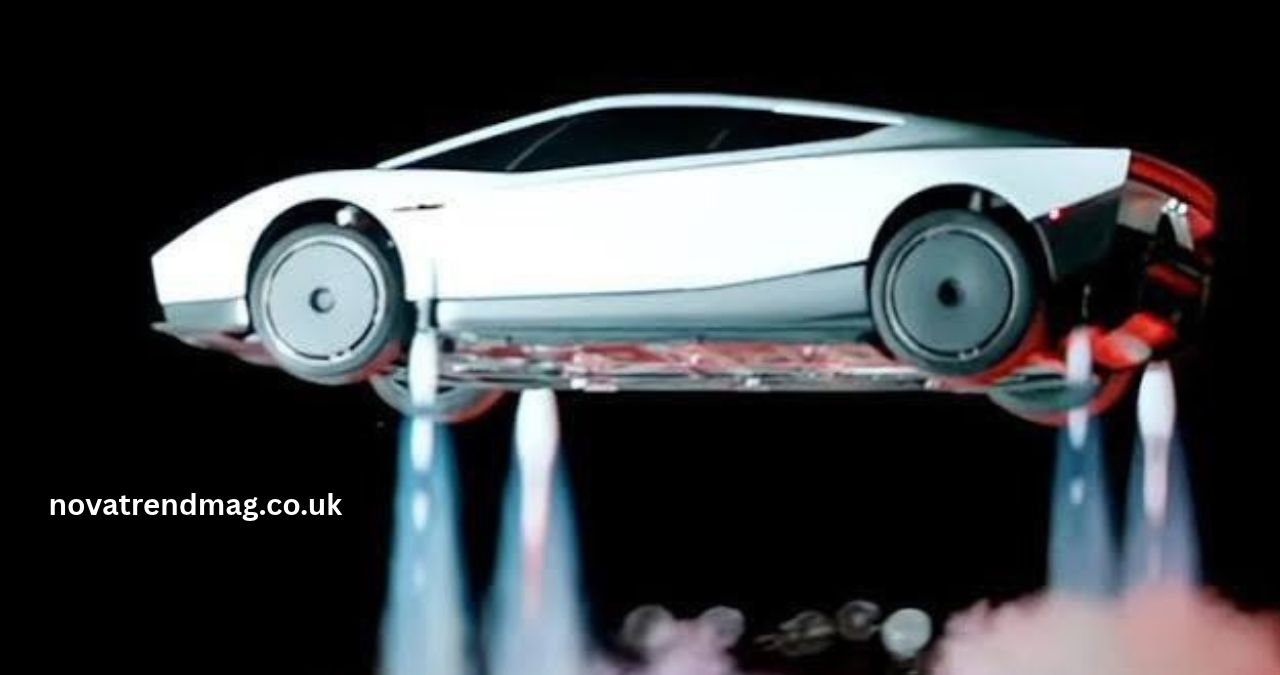

Introduction to Flying Cars 2026
Flying cars 2026 is becoming one of the most exciting topics in transportation, technology, and modern engineering. For decades, people imagined a future in which vehicles could travel on ordinary roads and then rise into the sky to avoid traffic. What once appeared only in science-fiction films is now influencing real aerospace research, electric aircraft development, and the future of urban mobility.
The idea of flying cars is no longer limited to futuristic illustrations or experimental inventions. Companies around the world are developing electric vertical takeoff and landing aircraft, commonly known as eVTOLs, alongside roadable aircraft designed to combine driving and flying. These technologies are attracting attention from investors, engineers, governments, and travelers who want faster ways to move between cities.
However, flying cars in 2026 are not yet available as everyday transportation for most people. Several manufacturers are testing aircraft, improving battery systems, pursuing aviation certifications, and preparing the infrastructure required for commercial operations. The industry is making progress, but important questions about safety, affordability, regulations, and practical usability remain.
Understanding flying cars 2026 requires looking beyond impressive demonstrations. It means examining how these vehicles work, which technologies are being developed, what benefits they might provide, and how close they are to becoming a normal part of daily life.
What Are Flying Cars in 2026?
Flying cars are vehicles designed to provide transportation through the air, sometimes with the additional ability to operate on conventional roads. The term covers several different technologies, and understanding their differences is essential when evaluating the future of personal aviation.
Some flying vehicles resemble small airplanes with folding wings that allow them to fit into certain road environments. Others look more like compact helicopters, using multiple electric-powered rotors to lift vertically. A third category includes advanced air taxis designed primarily for short passenger journeys between designated landing locations.
In 2026, electric vertical takeoff and landing aircraft are among the most closely watched developments in this field. Unlike conventional airplanes, which generally require runways, eVTOL aircraft can take off and land vertically when their design and operating conditions permit. This capability could make them useful for urban transportation, airport connections, emergency services, and regional travel.
Not every eVTOL aircraft is a flying car in the traditional sense. Many cannot be driven on public roads and are better described as electric aircraft or air taxis. Nevertheless, they are frequently discussed alongside flying cars because they share the broader ambition of making air transportation more accessible.
The distinction matters because an aircraft that flies between approved landing pads faces different engineering and legal challenges from a vehicle expected to drive through ordinary traffic and then take off from a neighborhood street.
The History of Flying Cars
Early Dreams of Personal Flight
The concept of a flying car developed long before modern electric propulsion systems existed. During the early twentieth century, inventors began exploring whether automobiles and airplanes could be combined into a single practical machine.
Early aviation pioneers recognized that personal aircraft could offer extraordinary freedom of movement. However, conventional airplanes required considerable space, specialized operating skills, and suitable landing areas. Combining those capabilities with a road vehicle appeared to offer a possible solution.
Several experimental designs attempted to overcome these limitations by adding wings, propellers, or detachable flight components to automobiles. Although these projects demonstrated that roadable aircraft were technically possible, they often involved complicated mechanical systems and compromises between driving performance and flight efficiency.
The Development of Modern Flying Vehicles
As aviation technology improved, engineers developed lighter materials, more efficient engines, and better control systems. These advances encouraged renewed interest in vehicles that could transition between road and air travel.
Nevertheless, practical limitations remained. A vehicle designed for road use needs wheels, crash protection, and compact dimensions, while an aircraft benefits from low weight, aerodynamic efficiency, and specialized flight structures. Meeting both sets of requirements in one machine is difficult.
During the twenty-first century, improvements in electric motors, batteries, computer-controlled flight systems, and lightweight composites created new opportunities. Instead of simply adapting an airplane into a car, engineers began designing aircraft specifically for short-distance transportation.
This change helped establish the modern advanced air mobility industry.
Why 2026 Is an Important Year
Flying cars 2026 represents a period in which the industry is moving beyond the idea stage toward more structured testing, certification, and operational planning.
Companies are refining prototypes, building manufacturing capabilities, and working with aviation authorities to establish the requirements for safe passenger operations. Cities and transportation organizations are also exploring how landing facilities, charging infrastructure, and air traffic management could support future services.
The industry is not progressing at the same speed everywhere. Some countries have advanced further in particular forms of passenger eVTOL development, while other markets remain focused on testing and certification.
The most important development is not that flying cars have suddenly become universally available. It is that engineers and regulators are increasingly addressing the practical requirements that must be satisfied before wider adoption becomes possible.
How Do Flying Cars Work?
Flying cars rely on different technologies depending on their design. Some use wings and conventional aircraft propulsion, while others depend on multiple rotors that generate vertical lift.
Electric Vertical Takeoff and Landing Technology
Electric vertical takeoff and landing technology allows an aircraft to rise vertically without a traditional runway. Many designs use several electric motors connected to rotors or propellers.
During takeoff, these rotors generate enough upward force to lift the aircraft and its occupants. Once the vehicle reaches a suitable altitude, its control systems stabilize the aircraft and guide it toward the intended route.
Some designs use separate systems for lifting and forward movement. Others tilt their rotors or propellers to transition between vertical flight and horizontal cruising. Each approach involves different engineering challenges related to stability, efficiency, noise, and mechanical complexity.
Electric propulsion can provide precise motor control and reduce the number of moving components associated with some conventional engine systems. However, electric aircraft still require careful maintenance, rigorous inspections, and reliable backup systems.
Batteries and Electric Motors
Battery technology is one of the most important factors influencing flying cars in 2026. Aircraft must carry enough stored energy to complete a journey while retaining an appropriate safety reserve.
Unlike ground vehicles, aircraft must continuously overcome gravity during flight. The energy required for takeoff, climbing, cruising, and landing can place substantial demands on batteries.
Manufacturers therefore focus on energy density, battery temperature management, charging speed, reliability, and long-term performance. Improvements in these areas could increase passenger capacity, extend useful range, and reduce operating costs.
Nevertheless, battery weight remains a major limitation. Adding more batteries can increase flight time, but the additional mass also increases the energy needed to lift the aircraft. This creates a difficult balance between range, payload, and efficiency.
Artificial Intelligence and Flight Control
Modern flying vehicles can use sophisticated software to manage stability, monitor aircraft systems, and assist pilots with navigation.
Flight-control computers process information from sensors and adjust motors or control surfaces to keep the aircraft within its operating limits. Advanced software may also help identify unusual operating conditions and provide warnings before a problem becomes more serious.
Autonomous technology is another area of development. In the future, certain aircraft could potentially perform more functions automatically, reducing the workload placed on human operators.
However, autonomous flight is not simply a software upgrade. Passenger-carrying aircraft must demonstrate reliable performance, appropriate responses to failures, cybersecurity protections, and compliance with aviation regulations. Human oversight and operational procedures will remain important considerations as the technology develops.
Main Types of Flying Cars in 2026
Roadable Aircraft
Roadable aircraft are among the closest matches to the traditional flying-car concept. These vehicles are designed to function as road transportation and aircraft, although their exact capabilities differ by model.
Some use folding wings or removable flight components to make ground transportation possible. Others require a more involved transition between driving and flying configurations.
The main advantage is the possibility of using one vehicle for two transportation environments. A person might drive to an approved airfield, prepare the aircraft for flight, travel through the air, and then continue driving after landing.
The disadvantage is complexity. Roadable aircraft must satisfy the practical requirements of both driving and flying, and they may not perform as efficiently as vehicles designed exclusively for either purpose.
Electric Air Taxis
Electric air taxis are designed primarily to transport passengers through the air rather than operate on roads.
Many feature compact cabins, multiple rotors, and electric propulsion systems. Depending on their configuration, they may carry a pilot and several passengers or use different levels of automation.
Air taxis could eventually serve routes between airports, business districts, transport hubs, and nearby communities. Instead of requiring every passenger to own a flying vehicle, an operator could manage a fleet and sell individual journeys.
This service-based approach may be more practical during the industry’s early years because aircraft utilization, maintenance, pilot training, and safety oversight can be managed by specialized companies.
Hybrid-Powered Flying Vehicles
Some aircraft concepts combine electric motors with other energy sources. Hybrid systems can potentially provide additional flexibility when battery-only operation does not meet a particular mission’s requirements.
For example, a hybrid design might use electric propulsion for certain flight stages while another power source supports extended operations or recharges the batteries.
These systems introduce their own engineering challenges, including extra weight, mechanical complexity, emissions considerations, and maintenance requirements. Their suitability depends on the aircraft’s intended purpose and the performance requirements established by its designers.
Flying Cars 2026: Companies and Industry Developments
Several companies are contributing to the development of advanced air mobility. Their projects illustrate the different approaches being used to bring short-distance air transportation closer to commercial use.
Joby Aviation
Joby Aviation is developing an electric aircraft intended for passenger transportation. Its design uses multiple electric propellers and is aimed at combining vertical takeoff with efficient forward flight.
The company’s broader vision involves operating air taxi services that connect important destinations within metropolitan areas. Such a service could provide an alternative to congested roads for selected journeys.
The challenge is moving from engineering prototypes to aircraft that meet all applicable certification and operational requirements. Testing, manufacturing quality, maintenance systems, pilot training, and airport or vertiport access must work together before an air taxi network can operate reliably.
Archer Aviation
Archer Aviation is another major participant in the electric air taxi industry. Its Midnight aircraft is designed for short urban and regional journeys, with a focus on passenger transportation.
The company has been working toward a commercial operating model involving aircraft production, partnerships, and the development of routes in selected markets.
Its progress highlights an important point about flying cars: building an aircraft is only one part of the business. Companies must also establish reliable supply chains, maintenance arrangements, customer demand, and the necessary permissions to carry passengers.
EHang
EHang is known for developing autonomous electric vertical takeoff and landing aircraft. Its work illustrates how the industry is exploring passenger transportation without relying on a conventional onboard pilot in every operating scenario.
Autonomous aircraft may eventually reduce certain operating costs, but they must meet demanding requirements for reliability, communication, emergency handling, and regulatory approval.
Certification in one country does not automatically permit unrestricted passenger operations elsewhere. Different aviation authorities may impose different requirements, and approvals for a particular use must not be confused with permission for every possible commercial service.
Other Emerging Manufacturers
Other companies, including Eve Air Mobility and SkyDrive, are developing aircraft and working toward their respective certification and commercialization goals.
Their activities demonstrate that the market is not based on one universal design. Some manufacturers prioritize compact urban transport, while others explore aircraft intended for different passenger capacities or regional missions.
Commercial timelines can change because of testing results, funding, manufacturing challenges, and regulatory requirements. Consequently, announced launch dates should be treated as targets rather than guarantees.
Benefits of Flying Cars
Reduced Travel Time
One of the strongest arguments for flying cars is their potential to reduce travel time on selected routes.
In crowded cities, road journeys can become unpredictable because of traffic signals, roadworks, congestion, and accidents. An air taxi traveling between suitable landing facilities could bypass many of these obstacles.
For example, a journey between an airport and a distant business district might take considerably less time by air under suitable conditions. However, the total journey still includes getting to the departure point, security or boarding procedures where applicable, and traveling from the landing site to the final destination.
Flying does not automatically make every trip faster. The benefit depends on distance, route availability, weather, and the efficiency of the complete transportation process.
Improved Regional Connectivity
Flying vehicles could provide new transportation options for communities separated by water, mountains, or difficult terrain.
Short air routes may be particularly useful where building new roads or rail infrastructure would be expensive or environmentally challenging.
Small airports, designated landing areas, and regional transport hubs could eventually support connections between towns that currently have limited transportation choices.
However, these benefits depend on the cost of operations and the ability to provide regular, dependable service.
Potential Environmental Advantages
Electric flying vehicles do not produce exhaust emissions during flight from their electric propulsion systems. This could help reduce local air pollution compared with certain conventional aircraft or combustion-powered alternatives.
Their overall environmental impact is more complicated. Electricity generation, battery production, aircraft manufacturing, charging infrastructure, and eventual battery disposal all contribute to the complete lifecycle footprint.
Noise is another important consideration. Electric motors can reduce some forms of engine noise, but rotors and propellers still generate sound. The impact depends on aircraft design, flight altitude, operating frequency, and surrounding buildings.
Flying cars will provide meaningful environmental benefits only where their full operating systems offer advantages over the transportation methods they replace.
New Employment Opportunities
The growth of advanced air mobility could create jobs in aircraft engineering, battery technology, manufacturing, maintenance, flight operations, air traffic management, and infrastructure development.
Universities and technical institutions may also develop new programs focused on electric aviation, aerospace software, and aircraft certification.
These opportunities could support innovation and specialized manufacturing. Nevertheless, the number and quality of jobs will depend on how quickly the industry develops and whether companies can establish financially sustainable businesses.
Challenges Facing Flying Cars in 2026
Safety and Reliability
Safety is the most important requirement for passenger-carrying flying vehicles. An aircraft operating above populated areas must be designed to manage equipment failures, changing weather, unexpected obstacles, and emergency situations.
Multiple rotors or motors can provide design flexibility, but their presence alone does not guarantee safety. Engineers must assess how the entire aircraft responds when components fail and demonstrate that the remaining systems can support safe outcomes under specified conditions.
Manufacturers also need dependable maintenance procedures, trained personnel, and clear emergency plans.
Public trust will depend on demonstrated reliability rather than attractive prototypes or promotional claims.
Strict Aviation Regulations
Flying cars cannot simply be introduced into public airspace without regulatory approval.
Depending on the aircraft and its intended use, manufacturers may need to complete design certification, flight testing, production approvals, and operational authorization. Commercial passenger services may face additional requirements involving pilots, maintenance, insurance, and air traffic coordination.
Roadable vehicles must also satisfy the relevant road-safety rules if they are intended to operate on public roads.
This combination of regulatory requirements can make development expensive and time-consuming. It also explains why a successful demonstration does not necessarily mean that a vehicle is ready for public sale or everyday passenger transportation.
High Purchase and Operating Costs
Early flying vehicles are likely to remain expensive because they involve specialized engineering, limited production volumes, and demanding maintenance requirements.
Electric aircraft also need trained pilots or appropriately authorized operators, secure storage, charging equipment, inspections, and suitable landing facilities.
Even if manufacturing costs decline, customers may still face significant operating expenses.
For this reason, commercial air taxi services may become accessible to some travelers before privately owned flying cars become affordable to ordinary households.
Weather and Noise Limitations
Wind, rain, poor visibility, turbulence, and other weather conditions can affect flight operations. The specific limits depend on the aircraft’s design and certification.
Flying vehicles may need to suspend service when conditions fall outside approved operating limits, even if road transportation remains available.
Noise can also influence where aircraft are permitted to fly and land. Communities may oppose frequent flights if they create excessive disturbance, particularly in densely populated neighborhoods.
Successful urban air mobility will require aircraft designs and operating practices that account for the needs of people living near flight routes.
Flying Cars vs. Traditional Cars and Helicopters
Flying cars, conventional cars, and helicopters serve different purposes.
Traditional cars are generally more practical for everyday travel because they can use established road networks, carry luggage, and reach destinations without requiring specialized landing facilities. Their main disadvantage is that they remain vulnerable to road congestion.
Helicopters can take off and land vertically, making them useful for emergency services, specialized transport, and certain commercial journeys. However, they can be noisy, expensive to operate, and demanding to maintain.
Electric air taxis aim to combine vertical flight with electric propulsion and potentially lower operating noise than some conventional aircraft. Their actual advantages will depend on aircraft performance, battery costs, service frequency, and infrastructure.
Roadable aircraft offer a different proposition because they attempt to combine driving and flying in a single vehicle. This flexibility comes with additional design compromises.
The most practical option depends on the journey. For short trips within a city, a conventional vehicle or public transportation may remain more convenient. For a carefully selected airport transfer or regional connection, an air taxi could eventually offer a meaningful time advantage.
How Much Will Flying Cars Cost?
The price of a flying car depends on whether the product is a roadable personal aircraft, an electric air taxi, or a specialized aviation vehicle.
Early models are likely to command premium prices because manufacturers must recover research, development, testing, and certification costs. Limited production can also make components and maintenance more expensive.
A private flying vehicle requires more than the initial purchase budget. Owners may need to pay for insurance, pilot training, hangar space, inspections, replacement parts, energy, and regulatory compliance.
Air taxi passengers would not need to purchase an aircraft. Instead, they would pay for individual journeys, with prices determined by operating expenses, route demand, competition, and local transportation conditions.
Over time, increased manufacturing volume and improved battery technology could reduce certain costs. However, there is no universal price for flying cars in 2026, and it would be misleading to suggest that every model will be affordable or commercially available this year.
Are Flying Cars Available to Buy in 2026?
The answer depends on what a buyer means by a flying car.
Certain roadable aircraft and personal aircraft have been developed for specialized buyers, subject to the applicable rules and availability. These products are not necessarily suitable for ordinary commuting, and their operation may require aviation qualifications and access to appropriate facilities.
Electric air taxis are a separate category. A company may conduct successful test flights or announce plans for commercial services without offering a certified aircraft for unrestricted private purchase.
Before considering any purchase, a prospective buyer should verify the exact model’s certification status, permitted uses, delivery availability, operating requirements, and maintenance arrangements.
It is also important to distinguish between a prototype, a pre-production aircraft, a certified product, and a vehicle approved for a particular commercial operation. These stages represent very different levels of readiness.
The Role of Flying Cars in Future Cities
Flying cars could eventually become one component of a broader transportation network rather than replace conventional vehicles.
Future cities may combine trains, buses, electric cars, bicycles, and selected air taxi routes. Each transportation method would serve journeys for which it offers a practical advantage.
Designated landing facilities, sometimes called vertiports, could be located near airports, transport hubs, business districts, and other suitable sites. Passengers might use an electric vehicle or train to reach a vertiport before completing the final part of a journey by air.
This system would require coordination between transport operators, local authorities, property developers, and aviation regulators.
Airspace management would also become increasingly important as more aircraft share urban and regional environments. Digital flight planning, communication systems, weather monitoring, and automated traffic coordination could help organize operations, but these systems must be designed to handle unexpected events.
The most successful cities will likely be those that integrate air transportation into existing infrastructure instead of treating it as an isolated technological experiment.
Flying Cars and Artificial Intelligence
Artificial intelligence could influence several parts of the flying-car industry.
During aircraft development, advanced software can help engineers analyze flight data, simulate operating conditions, and identify areas where designs may need improvement. In commercial operations, software can support route planning, maintenance scheduling, passenger management, and weather assessment.
Autonomous flight is another important research area. Aircraft capable of performing more tasks automatically might eventually support new types of transportation services.
However, AI cannot eliminate the need for reliable engineering, regulatory oversight, and emergency planning. A flight-control system must behave predictably when sensors provide conflicting information, communication is interrupted, or an unexpected obstacle appears.
Developers must also consider cybersecurity. Unauthorized access to aircraft systems or communication networks could create serious risks, making secure software design and continuous monitoring essential.
The future of flying cars will therefore depend on combining intelligent software with proven mechanical systems, effective human oversight, and comprehensive safety standards.
Are Flying Cars Environmentally Friendly?
Electric flying cars offer the possibility of reducing direct emissions during operation, but their environmental performance depends on the complete transportation system.
Battery production requires raw materials, energy, and industrial processing. Aircraft manufacturing also consumes resources, while charging facilities and landing infrastructure require construction and maintenance.
The source of electricity matters as well. Charging aircraft with electricity generated from lower-emission sources can improve their overall environmental performance.
Another consideration is passenger capacity. An aircraft carrying several passengers on a useful route may provide a different environmental outcome from one carrying a single passenger on a short journey.
Comparisons should therefore consider emissions per passenger over the entire journey, including access to landing facilities and travel from the destination.
Flying cars are not automatically greener than trains, buses, or electric cars. Their environmental value will depend on how efficiently they are operated and which transportation activities they replace.
Tips for Evaluating Flying Car News in 2026
The rapid development of advanced air mobility makes it important to evaluate announcements carefully.
A video showing an aircraft in flight proves that a particular demonstration occurred, but it does not establish that the vehicle is certified for passenger service. Similarly, a company announcing a future launch date is not the same as operating a dependable commercial route.
Readers should examine whether a manufacturer has completed relevant testing, obtained the necessary approvals, and demonstrated that it can produce and maintain aircraft consistently.
Claims about range and speed also require context. Maximum performance figures may depend on weather, payload, battery reserves, and other operating conditions. Real-world journeys can produce different results.
Pricing announcements should be assessed alongside delivery schedules, operating expenses, and the actual configuration being offered.
These distinctions help separate genuine engineering progress from marketing promises and make it easier to understand which developments could affect transportation in the near future.
The Future of Flying Cars After 2026
The future of flying cars will depend on gradual improvements across several interconnected technologies.
Battery systems may become lighter and more efficient, allowing aircraft designers to explore better combinations of range, payload, and energy consumption. Manufacturing advances could improve consistency and lower production costs.
Regulatory frameworks may also become more established as authorities gain experience with new aircraft configurations and operating models. Better infrastructure could support more predictable services between selected destinations.
At the same time, manufacturers will need to prove that their businesses can remain financially sustainable. Aircraft development is expensive, and companies must balance research costs against certification timelines, manufacturing capacity, and customer demand.
A realistic future may begin with specialized routes serving airports, business centers, and regional destinations. Private flying cars could develop more slowly because they require individual owners to manage additional training, maintenance, and operating responsibilities.
Widespread adoption would require not only successful aircraft but also public confidence, affordable services, practical landing locations, and effective integration with existing transport systems.
Frequently Asked Questions About Flying Cars 2026
Will flying cars be common in 2026?
Flying cars are not yet common forms of everyday transportation in 2026. The industry is progressing through aircraft testing, certification, and commercial planning, but widespread personal ownership and routine use remain limited.
Can flying cars avoid traffic jams?
Flying vehicles can travel above road congestion on suitable routes, potentially saving time. However, passengers still need access to approved takeoff and landing locations, and airspace, weather, and operating rules can limit their usefulness.
Are flying cars electric?
Many modern air taxi prototypes use electric propulsion, but not every flying vehicle is fully electric. Roadable aircraft and other designs may use conventional or hybrid power systems.
Do flying cars need pilots?
Some flying vehicles are designed for onboard pilots, while others are being developed with autonomous flight capabilities. The requirements depend on the aircraft, its certification, the operating environment, and applicable aviation regulations.
Are flying cars safe?
Safety depends on aircraft design, testing, maintenance, operating procedures, and regulatory approval. A prototype or successful demonstration alone does not establish that a vehicle is ready for unrestricted passenger use.
Will flying cars become affordable?
Costs could decline as manufacturing scales up and technology improves. Nevertheless, aircraft ownership involves training, maintenance, insurance, storage, and other expenses beyond the purchase price, so affordability will vary considerably.
Can flying cars land anywhere?
No. Flying vehicles generally require suitable landing areas and must operate within applicable aviation rules. Even vertical takeoff aircraft cannot automatically use every rooftop, road, parking lot, or open space.
What is the difference between a flying car and an air taxi?
A flying car traditionally refers to a vehicle that can both drive on roads and fly. An air taxi is primarily an aircraft that carries passengers between designated locations. Many vehicles described as flying cars in the media are actually air taxis.
Conclusion
Flying cars 2026 represents an important stage in the evolution of personal aviation and electric transportation. Advances in electric propulsion, battery systems, flight-control software, and aircraft engineering are bringing new forms of short-distance air travel closer to practical use.
Companies developing electric air taxis and roadable aircraft are exploring different ways to reduce travel time and improve regional connectivity. These technologies could eventually support airport transfers, business travel, emergency operations, and specialized transportation services.
However, the road to widespread adoption remains challenging. Safety certification, high development costs, battery limitations, weather conditions, infrastructure requirements, and public acceptance will determine how quickly flying vehicles become commercially useful.
The most realistic expectation is that flying cars will develop gradually, beginning with specialized aircraft and selected routes rather than immediately replacing ordinary cars. As the industry matures, successful designs will need to demonstrate that they are safe, reliable, environmentally responsible, and economically practical.
Ultimately, the future of flying cars will be shaped not by futuristic promises alone but by measurable engineering progress and the ability to solve real transportation problems. In 2026, that future is becoming more tangible, even though the era of everyday flying cars has not fully arrived.