
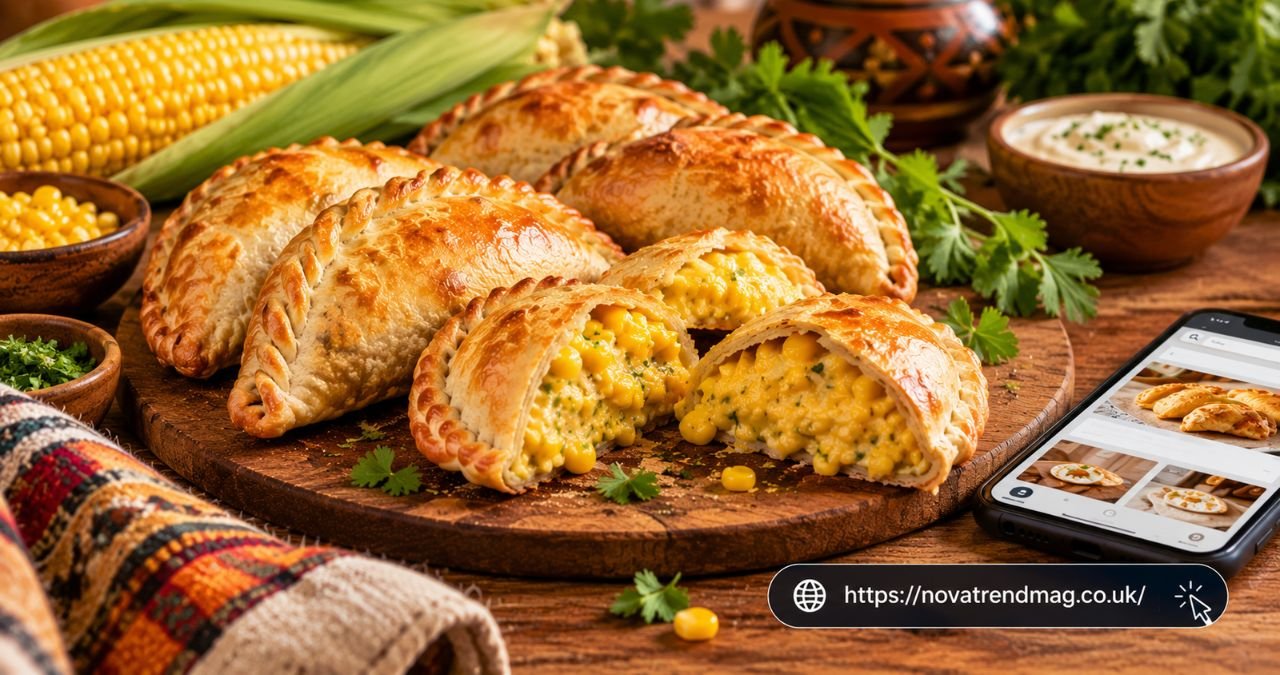

When people search for the best empanada de humita near me, they are usually looking for more than a quick snack. They want a warm, flavorful pastry with a creamy corn filling, a satisfying crust, and the comforting taste associated with traditional Latin American cooking. Empanadas de humita are especially appealing because their filling is naturally rich and aromatic without relying on heavy meat-based ingredients. Made primarily with sweet corn, onions, spices, and often milk, cheese, or a creamy sauce, this style of empanada has become a favorite among both longtime fans and curious food lovers.
Finding an excellent empanada de humita nearby can sometimes be surprisingly difficult. Two restaurants may use the same name while producing completely different results. One might offer a delicate, buttery pastry with a smooth corn filling, while another may serve a thicker crust packed with whole kernels and stronger seasoning. Understanding what makes a good humita empanada can therefore make the search much easier. From its South American roots and traditional preparation methods to modern restaurant interpretations, there is plenty to discover about this comforting food.
What Is an Empanada de Humita?
An empanada de humita is a filled pastry inspired by humita, a traditional corn-based preparation found in several parts of South America. The word “humita” is closely associated with dishes made from fresh corn, often combined with onions, milk, cheese, herbs, and seasonings. When that flavorful mixture is placed inside an empanada shell and baked or fried, it becomes a portable version of a classic regional comfort food.
The defining characteristic of a humita empanada is its filling. Instead of beef, chicken, or other common empanada fillings, the center focuses on corn. Depending on the recipe, the corn can be finely processed into a creamy mixture or left partially whole to provide texture. This difference can dramatically affect the final eating experience.
A well-made empanada de humita generally has a balanced relationship between pastry and filling. The shell should be sturdy enough to hold the creamy interior without becoming excessively thick. At the same time, the filling should be flavorful without becoming watery or overwhelmingly sweet. When these elements work together, the result is an empanada that feels both traditional and satisfying.
The History Behind Humita and Corn-Filled Empanadas
The history of humita is connected to the long culinary traditions of the Andes and broader South American region. Corn has played an important role in indigenous food cultures for centuries, particularly across areas that are now associated with countries such as Argentina, Chile, Bolivia, Ecuador, and Peru. Different communities developed their own techniques for preparing corn, using ingredients that were available locally.
Traditional humita itself can take several forms. In some preparations, seasoned corn is wrapped in corn husks and steamed. In others, the corn mixture is cooked into a creamy dish. Regional ingredients and family recipes have contributed to countless variations.
Empanadas developed through an equally fascinating culinary history. Filled pastries became deeply established throughout Latin America, with each country and region creating distinctive versions based on local ingredients, cooking methods, and cultural influences. The combination of empanada pastry with humita filling represents the meeting of two important food traditions.
Over time, humita empanadas moved beyond home kitchens and regional bakeries. They became common in restaurants, cafés, bakeries, food markets, and specialty Latin American establishments. Today, someone searching for the best empanada de humita near me may encounter both highly traditional versions and creative modern interpretations.
Why Empanada de Humita Has Become So Popular
The popularity of empanada de humita comes partly from its versatility. It can function as a light lunch, afternoon snack, breakfast item, appetizer, party food, or casual dinner. Its handheld format also makes it convenient for people who want something flavorful without committing to a full restaurant meal.
Another reason is its approachable flavor. Corn naturally provides sweetness, while onions and seasonings introduce savory depth. Cheese or dairy can add richness, creating a filling that feels indulgent without necessarily being heavy.
Humita empanadas can also appeal to people who do not usually choose meat-filled pastries. Their vegetarian-friendly nature makes them useful for mixed gatherings where different dietary preferences need to be considered. However, ingredients vary between restaurants, so anyone with specific dietary requirements should always check how a particular version is prepared.
The combination of familiar corn flavor and traditional Latin American seasoning also gives the dish broad international appeal. People who have never tried humita before can often appreciate its flavor immediately.
What Makes the Best Empanada de Humita Near Me Stand Out?
Searching for the best empanada de humita near me should involve more than choosing the first nearby restaurant that lists the dish. The quality of the pastry, filling, ingredients, preparation, and cooking method all influence the final result.
The pastry is one of the first things to notice. A good shell should have enough structure to protect the filling but should not dominate it. Baked empanadas often have a crisp exterior with a slightly tender interior, while fried versions can offer a more pronounced crunch.
The filling is equally important. Fresh corn can provide a naturally sweet and fragrant flavor. Some cooks blend part of the corn while keeping some kernels intact, creating a combination of creaminess and texture. Onions are frequently used to build a savory foundation, while spices and herbs add complexity.
Cheese can also change the character of a humita empanada. Mild cheese may simply add creaminess, while a stronger cheese can introduce saltiness and depth. The best versions generally maintain balance rather than allowing one ingredient to overpower everything else.
Fresh Corn Versus Processed Corn
One interesting difference between humita empanadas is the type of corn used in the filling. Fresh corn is often valued for its natural sweetness and aroma, particularly when it is in season. It can produce a vibrant filling with a noticeable corn character.
Frozen or canned corn can also be used successfully when prepared carefully. These options can provide consistency throughout the year, although the flavor and texture may differ from freshly prepared corn.
The cooking technique matters just as much as the ingredient itself. Even ordinary corn can become delicious when slowly cooked with onions, seasoning, and other ingredients. Conversely, premium ingredients can produce disappointing results if the filling is overcooked or poorly seasoned.
For diners comparing different restaurants, paying attention to the texture of the corn filling can reveal a lot about how thoughtfully the empanada was prepared.
Baked or Fried: Which Empanada Is Better?
One of the most common comparisons when choosing an empanada is baked versus fried. There is no universal answer because the best option depends on personal taste and the recipe used by the restaurant.
Baked empanadas typically have a lighter exterior and allow the flavor of the filling to remain prominent. The crust may become golden and crisp while retaining some softness inside. This style can work particularly well with creamy humita filling because the delicate pastry complements the corn rather than competing with it.
Fried empanadas tend to have a more dramatic texture. The outside can become deeply crisp, while the interior remains hot and soft. For people who enjoy crunchy pastries, a fried humita empanada can be especially satisfying.
The most important factor is execution. A poorly fried empanada can become greasy, while an overbaked empanada can have a dry or overly hard crust. A skilled kitchen can make either method work beautifully.
How to Judge an Empanada de Humita Before Taking the First Bite
Appearance can offer useful clues. A well-shaped empanada should look properly sealed, with a pastry surface that appears evenly cooked. A golden exterior often suggests good browning, although color alone cannot determine quality.
The aroma is another valuable indicator. A good humita filling should have a noticeable corn fragrance combined with savory notes from onions, herbs, spices, or cheese. If the filling smells fresh and inviting, it is usually a positive sign.
Texture becomes important once you taste it. The crust should have enough crispness or tenderness to provide contrast with the filling. The interior should feel creamy or moist without being watery.
Flavor balance is perhaps the most important factor. Sweet corn should not make the empanada taste like dessert. Likewise, excessive salt, cheese, or spice can hide the natural flavor of the corn. The strongest versions create harmony between sweetness, savory seasoning, richness, and pastry.
Why Local Search Matters When Looking for Humita Empanadas
The phrase best empanada de humita near me reflects a growing habit in modern food discovery. People increasingly use local searches to find dishes rather than simply choosing restaurants based on general popularity.
This can be particularly useful with traditional foods because independent bakeries and small family-owned restaurants may prepare exceptional versions that are not widely known outside their local area. A neighborhood establishment may have a recipe passed through generations, while a newer restaurant might offer an innovative interpretation.
Local availability also matters because empanadas are best when served fresh. A pastry that has recently come from the oven can have a dramatically better texture than one that has been sitting for hours.
How Regional Recipes Change the Flavor
Humita recipes are not identical across South America. Regional cooking traditions influence the ingredients, texture, seasoning, and cooking method.
Some versions emphasize creamy corn and dairy, creating a rich and smooth filling. Others focus more heavily on fresh corn texture, herbs, onions, or spices. Some recipes are relatively mild, while others include stronger seasoning.
This regional diversity is one reason it is difficult to define a single “correct” humita empanada. What one person considers authentic may differ from another person’s family tradition.
Instead of expecting every restaurant to produce the same result, food lovers can approach humita empanadas as a broad culinary category with many legitimate interpretations.
The Role of Cheese in Humita Empanadas
Cheese can transform an ordinary corn filling into something richer and more complex. Depending on the recipe, it may be incorporated directly into the filling or used as an additional layer.
A mild cheese can blend naturally with sweet corn, producing a creamy and comforting taste. A sharper cheese can create stronger contrast and give the empanada a more savory personality.
However, too much cheese can hide the defining character of the dish. The best humita empanadas generally use cheese as a supporting ingredient rather than allowing it to completely replace the corn flavor.
Common Ingredients Used in Humita Filling
Although recipes vary, corn is the central ingredient. Onions are also common because their savory sweetness complements the corn. Milk, cream, butter, or cheese may be used to develop richness.
Herbs and spices can differ significantly depending on the regional tradition and individual cook. Some preparations are intentionally simple, allowing the corn to remain the main flavor. Others include more seasoning for a stronger savory profile.
The pastry itself may contain flour, fat, salt, and water, although exact recipes vary. Some restaurants create their own dough, while others use professionally prepared pastry.
The quality of each ingredient matters, but the cooking technique determines how successfully they come together.
How to Find a Great Humita Empanada in Your Area
When looking for the best empanada de humita near me, consider restaurants and bakeries known for Latin American, Argentine, Chilean, or South American cuisine. Specialty bakeries can be especially interesting because empanadas may be prepared throughout the day.
It is also useful to consider how busy the establishment is. A steady flow of customers can sometimes indicate that food is being prepared and sold regularly, which may improve freshness.
Another useful approach is to compare descriptions carefully. Restaurants that explain their filling ingredients may give you a better idea of what to expect. If a menu simply lists “humita,” asking about the preparation can reveal whether the filling is creamy, chunky, cheesy, spicy, or traditionally seasoned.
What to Ask When Ordering Humita Empanadas
If you are trying a restaurant for the first time, a few simple questions can help you choose. You might ask whether the empanada is baked or fried, whether the filling contains cheese, and whether the corn mixture is creamy or chunky.
If dietary restrictions are important, ask about the pastry ingredients and preparation method as well. Some recipes may contain dairy, while others could use additional ingredients that are not immediately obvious from the menu description.
These questions are particularly useful when searching for an authentic experience because they help you understand the restaurant’s interpretation of humita rather than assuming every version tastes the same.
Empanada de Humita as a Vegetarian-Friendly Choice
For people who enjoy vegetarian food, humita empanadas can provide a satisfying alternative to traditional meat-filled pastries. Corn creates natural sweetness and substance, while dairy ingredients can add protein and richness.
That said, vegetarian does not automatically mean suitable for every diet. Some pastry recipes may contain animal-derived fats, and cooking practices can vary. Anyone following a strict dietary pattern should confirm ingredients directly with the restaurant.
The growing interest in plant-forward eating has also encouraged chefs to experiment with dairy-free and vegan-inspired corn empanadas. These newer versions may use plant-based ingredients while maintaining the creamy texture associated with traditional humita.
Modern Trends in Humita Empanadas
Traditional food continues to influence modern restaurant menus, and empanadas are no exception. Contemporary chefs are experimenting with fillings, pastry colors, spices, cheeses, and presentation while retaining the basic concept of a filled pastry.
Humita has benefited from this trend because corn pairs naturally with many flavors. Modern interpretations might emphasize roasted corn, smoky seasoning, fresh herbs, spicy peppers, or alternative cheeses.
There is also growing interest in smaller empanadas designed for sharing. Miniature versions can work well for events, tasting menus, catering, and casual gatherings.
Despite these innovations, the traditional appeal of corn, onions, creamy texture, and golden pastry remains at the heart of the dish.
Homemade Versus Restaurant-Made Empanadas
Restaurant-made empanadas offer convenience and professional preparation, while homemade versions provide greater control over ingredients and seasoning.
Making humita filling at home can also be an enjoyable way to understand the dish. The cook can adjust sweetness, saltiness, creaminess, cheese, and spices according to personal preference.
Restaurant versions, however, may have advantages in pastry technique. Experienced cooks often develop dough recipes that produce consistent texture and attractive sealing. They may also have specialized ovens or frying equipment.
For someone searching for the best empanada de humita near me, tasting several restaurant versions can actually provide inspiration for future homemade experiments.
How Humita Empanadas Compare With Other Empanada Fillings
Compared with beef empanadas, humita tends to be sweeter, creamier, and lighter in overall character. Beef versions usually emphasize savory meat, spices, onions, and sometimes olives or eggs.
Chicken empanadas often have a softer savory profile and may include vegetables or sauce. Cheese-filled empanadas can be richer and saltier, while vegetable empanadas may contain a wider range of textures.
Humita occupies an interesting position because corn provides both sweetness and substance. It can feel comforting like a creamy savory pie while still having the convenience and crisp exterior of an empanada.
Best Times to Enjoy an Empanada de Humita
There is no single correct time to eat a humita empanada. It can be an excellent breakfast when paired with coffee or tea, a convenient midday meal, or a satisfying afternoon snack.
It can also work as an appetizer before a larger Latin American meal. At gatherings, several varieties of empanadas can be served together, allowing guests to compare fillings.
The portability of empanadas also makes them useful for picnics, casual travel meals, office lunches, and family events. Their versatility is one of the reasons they have remained popular across generations.
Tips for Getting the Most From Your Order
Freshness should always be a priority. If possible, choose an empanada that has recently been baked or fried. The contrast between a crisp exterior and warm filling is a major part of the experience.
Serving temperature matters as well. A very hot empanada may temporarily hide delicate flavors, while one that has cooled too much can lose some of its texture. Allowing it to rest briefly can make the filling easier to appreciate.
Pairings can also change the experience. A light salad can balance a rich empanada, while a simple beverage can allow the corn flavor to remain prominent. The ideal pairing ultimately depends on the seasoning and richness of the particular recipe.
Why Authenticity Does Not Always Mean One Exact Recipe
When people search for the best empanada de humita near me, they may also wonder what makes a version authentic. The answer is more complicated than following one universal recipe.
South American food traditions developed across different countries, regions, families, and generations. Recipes naturally changed according to local ingredients and personal preferences.
Authenticity can therefore involve technique, ingredients, cultural history, and connection to tradition rather than one rigid ingredient list. A restaurant can respect the tradition while still creating its own variation.
This is one reason humita empanadas are so interesting. Each version can tell a slightly different culinary story.
Common Mistakes That Can Ruin a Humita Empanada
One common mistake is creating a filling that is too wet. Excess moisture can soften the pastry and make the empanada difficult to eat.
Another problem is insufficient seasoning. Corn has a naturally sweet profile, so the filling needs enough savory elements to prevent the final product from tasting flat.
An overly thick pastry can also overwhelm the filling. The crust should support the humita mixture rather than becoming the main feature.
On the other hand, an extremely thin or poorly sealed pastry may break and allow the filling to escape during cooking. Good empanada making requires a careful balance between durability and delicacy.
Frequently Asked Questions About the Best Empanada de Humita Near Me
What is an empanada de humita?
An empanada de humita is a filled pastry containing a corn-based mixture inspired by traditional South American humita. The filling may include corn, onions, cheese, milk, herbs, spices, or other regional ingredients.
Is empanada de humita vegetarian?
Many empanadas de humita are vegetarian because their main filling is corn and vegetables. However, recipes differ, and some may contain ingredients that are unsuitable for particular dietary requirements. Checking with the restaurant is the safest approach.
Is humita empanada sweet or savory?
Humita empanadas are generally savory, although sweet corn gives them a naturally mild sweetness. Onions, cheese, herbs, spices, and other ingredients create a balanced savory flavor.
Is baked or fried humita empanada better?
Both can be excellent. Baked versions often have a lighter, crisp pastry, while fried versions typically provide a crunchier exterior. Personal preference and cooking quality matter more than the method itself.
What does humita taste like?
Humita usually has a sweet corn flavor combined with savory ingredients. Depending on the recipe, it may also taste creamy, cheesy, herbal, buttery, or mildly spiced.
Can I make humita empanadas at home?
Yes. Homemade humita empanadas can be prepared by creating a corn-based filling, placing it inside empanada dough, sealing the pastry, and then baking or frying it. Homemade preparation also allows you to customize the seasoning and filling texture.
Why are humita empanadas popular?
Their popularity comes from their comforting flavor, convenient shape, vegetarian-friendly potential, and connection to South American culinary traditions. They are also versatile enough to work as snacks, meals, appetizers, and party foods.
The Future of Humita Empanadas
The future of humita empanadas looks promising as international interest in regional Latin American cuisine continues to grow. Diners are increasingly interested in foods that have cultural stories behind them rather than simply being trendy dishes.
Restaurants are also becoming more creative with traditional recipes. This means diners may encounter new versions that incorporate modern techniques while still respecting the original idea of a corn-filled pastry.
At the same time, classic preparations will remain important. There will always be people who prefer a simple empanada with fresh corn, onions, traditional seasoning, and a perfectly browned shell.
This combination of tradition and innovation gives humita empanadas a strong place in the modern food landscape.
Final Thoughts on Finding the Best Empanada de Humita Near Me
Finding the best empanada de humita near me is ultimately about discovering the right combination of freshness, texture, flavor, ingredients, and preparation. A truly memorable humita empanada should have a pastry that complements rather than overwhelms the filling, while the corn mixture should deliver a balanced combination of sweetness, savory depth, creaminess, and seasoning.
The dish has a fascinating connection to South American culinary history, yet it continues to evolve through modern restaurants, bakeries, and creative chefs. Whether you prefer a traditional baked version, a crispy fried interpretation, a cheese-rich filling, or a lighter contemporary recipe, there is plenty of room to explore.
Most importantly, the search should be treated as a culinary experience rather than simply a hunt for a convenient snack. Trying different restaurants, comparing textures, learning about regional traditions, and paying attention to preparation can help you discover what makes one humita empanada stand out from another.
For anyone who enjoys corn, comforting pastries, and Latin American flavors, empanada de humita deserves a place on the must-try list. The next time you search for the best empanada de humita near me, look beyond convenience and consider freshness, craftsmanship, flavor balance, and the story behind the food. Those details are often what turn an ordinary empanada into one worth remembering.