
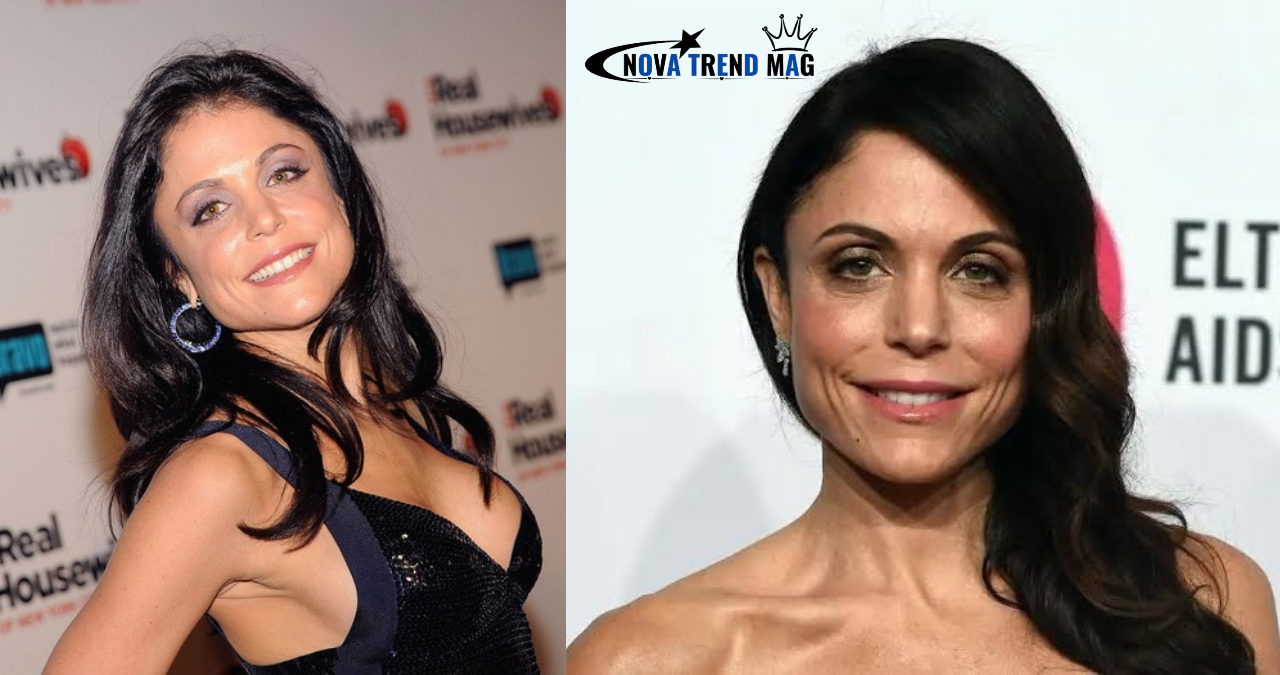

When people search for bethenny frankel net worth, they are usually looking beyond the headline number. Bethenny Frankel is not simply a television personality who became wealthy through reality television. She built her financial success through branding, entrepreneurship, product development, media exposure, investments, real estate, writing, and an unusually strong understanding of how to turn public attention into business value. Her journey from a relatively modest financial position to becoming one of the best-known entrepreneurs associated with reality television is one of the more interesting celebrity business stories of the modern era.
Public estimates of Bethenny Frankel’s wealth vary because her private assets, investments, business arrangements, property holdings, taxes, expenses, and deal structures are not completely available to the public. A frequently reported modern estimate places her fortune around $80 million, although this should be treated as an estimate rather than a verified personal balance sheet. Much of the story behind that wealth can be traced to the extraordinary success of the Skinnygirl brand and the reported sale of its cocktail business in 2011. CNN reported that Frankel had transformed an $8,000 starting position into a business deal valued at a reported $120 million.
Who Is Bethenny Frankel?
Bethenny Frankel is an American entrepreneur, author, television personality, producer, and philanthropist who became widely recognized through reality television. She was born in New York in 1970 and developed an interest in food, wellness, entertainment, and business long before she became a household name.
Her public profile expanded significantly when she appeared on The Apprentice: Martha Stewart in 2005. Her participation in that program helped introduce her personality and entrepreneurial ambition to a wider audience. Several years later, she became one of the original stars of The Real Housewives of New York City, where her direct personality, humor, ambition, and business-minded approach quickly made her stand out.
However, television was never the entire foundation of her financial strategy. Frankel has repeatedly described television as a platform that could help her build a much larger audience for her products. That distinction is important when examining Bethenny Frankel’s net worth because it helps explain why her financial success extended far beyond television salaries.
Bethenny Frankel Net Worth and the Importance of Her Business Strategy
The most important factor in understanding Bethenny Frankel wealth is the difference between earning money from fame and using fame to build an independent business.
Many reality television personalities earn income through appearances, sponsorships, endorsements, and television contracts. Frankel followed a different path. She attempted to create intellectual property and consumer products that could continue generating value beyond a particular television season.
Her strategy was relatively straightforward but difficult to execute. She developed a recognizable personal identity, connected that identity to a consumer problem, created a product around the problem, promoted the product through television, and then expanded the concept into a broader lifestyle brand.
This approach became especially powerful with Skinnygirl. The brand started with a low-calorie ready-made margarita and eventually expanded into other categories. The cocktail business became valuable enough to attract a major acquisition, while Frankel retained rights to the Skinnygirl name for additional product opportunities. Fortune has described how she continued developing the brand into areas such as snacks, appliances, condiments, apparel, and sweeteners after the beverage transaction.
That model demonstrates why celebrity wealth should not always be measured by television income alone. In Frankel’s case, the television platform was an important accelerator, but entrepreneurship created the larger financial opportunity.
The Skinnygirl Breakthrough
The Skinnygirl story is the central chapter in any serious discussion about Bethenny Frankel’s net worth.
Frankel developed the idea for a lower-calorie margarita because she wanted a cocktail that better suited her approach to food and lifestyle. Instead of waiting for an established beverage company to create the product, she eventually decided to develop and market it herself.
The timing was important. Frankel was appearing on The Real Housewives of New York City, giving her access to an audience that could immediately become familiar with her personality, philosophy, and products.
The product was introduced as Skinnygirl Margarita in 2009. Its appeal was not simply that it was a drink. It represented a larger concept: a recognizable celebrity personality connected to a consumer-friendly lifestyle promise.
The brand gained substantial attention, and in 2011 Frankel sold the cocktail business to Beam Global Spirits & Wine. Various publications have reported different figures for the transaction, with $100 million and $120 million frequently cited. Because the exact financial terms and Frankel’s personal proceeds are not publicly documented in a complete way, it is more accurate to describe the deal as a reported nine-figure transaction rather than claiming that the entire reported sale amount became her personal wealth.
This distinction matters when calculating net worth. A company sale price does not automatically equal an entrepreneur’s personal profit. Ownership percentages, taxes, transaction expenses, previous investments, legal arrangements, and other financial considerations can all affect what the founder actually keeps.
Nevertheless, the Skinnygirl transaction transformed Frankel’s financial position and cemented her reputation as a serious entrepreneur.
How Bethenny Frankel Turned Television Fame Into Business Value
Frankel’s television career is another important contributor to her financial story.
When she joined The Real Housewives of New York City, she was not initially one of the wealthiest women on television. In fact, CNN reported that she had only around $8,000 in the bank when filming began. Her approach to the show was unusually business-focused. She understood that a reality television program could provide something extremely valuable: distribution and attention.
Instead of treating television exposure as the final product, she treated it as a marketing engine.
That concept has become increasingly common in the creator economy, but Frankel was using it before social media influencers became a dominant force in advertising. Her television appearances helped audiences become familiar with her voice, personality, lifestyle philosophy, and products.
The result was a powerful relationship between entertainment and commerce.
Her success became a model for other personalities who wanted to build businesses around their public identities. Fortune later described Frankel as someone who had used reality television to build a serious business empire rather than simply becoming another celebrity associated with reality programming.
Bethenny Frankel’s Television Career
Frankel’s television career includes considerably more than The Real Housewives of New York City.
After becoming a prominent cast member, she received her own spin-off programming. Bethenny Getting Married? followed a major period of her personal life, while Bethenny Ever After continued the story. She later hosted a nationally syndicated daytime talk show called Bethenny.
She also appeared in other television projects and eventually returned to The Real Housewives of New York City. Her media career expanded further into production, with projects that demonstrated her interest in controlling the business side of entertainment.
Television therefore contributed to her earnings in several ways. There were direct television payments, increased visibility, opportunities for sponsorships, promotional value for her products, and a larger audience for her books and other ventures.
The indirect value of television may have been even more important than the direct compensation.
Books and Publishing as Another Revenue Stream
Bethenny Frankel has also built a successful career as an author.
Her books have covered subjects connected to food, wellness, relationships, personal development, and entrepreneurship. Several became commercially successful, helping establish her as more than a television personality.
Her writing career matters when examining Bethenny Frankel’s net worth because books can create multiple forms of value. Authors can earn advances, royalties, speaking opportunities, publicity, and increased authority in their respective fields.
Frankel’s books also strengthened her overall personal brand. A person who appears on television may be famous, but a published author can develop another level of credibility around a specific subject.
Her book A Place of Yes: 10 Rules for Getting Everything You Want Out of Life, for example, reflected the entrepreneurial philosophy that had already shaped her career. Her publishing activities helped reinforce the message that she was building something rather than simply appearing on camera.
Real Estate and Property Investments
Real estate has also played a role in Frankel’s financial life.
Like many high-profile entrepreneurs and celebrities, Frankel has been involved in buying, renovating, selling, and discussing luxury properties. Her interest in real estate has appeared in both her personal life and television projects.
Property can be an important wealth-building tool because its value can appreciate over time while also offering opportunities for renovation and strategic resale.
However, estimating how much of Bethenny Frankel’s net worth comes from real estate is difficult because property values fluctuate, ownership arrangements can change, and a property’s market value does not necessarily equal its owner’s liquid wealth.
Real estate should therefore be viewed as one component of her broader financial portfolio rather than a single explanation for her fortune.
The Expansion of the Skinnygirl Brand
One of the smartest parts of Frankel’s business strategy was recognizing that the Skinnygirl name had value beyond a single cocktail.
After selling the beverage operation, she retained rights to the Skinnygirl brand for other categories. This allowed her to continue building around an established name without needing to recreate her audience from the beginning.
Over time, Skinnygirl became associated with products across different areas, including food, snacks, sweeteners, apparel, shapewear, cookware, and other lifestyle products.
This illustrates an important branding principle. A successful brand can become more valuable when customers associate it with a consistent idea rather than one particular product.
In Frankel’s case, that idea was connected to convenience, lifestyle, food, wellness, and a distinctive personality.
Investments and Financial Intelligence
Another reason Bethenny Frankel net worth cannot be explained solely by Skinnygirl is her interest in investments.
Frankel has discussed making strategic investments and has become increasingly interested in opportunities outside her original businesses. One widely reported example is her investment in Cameo.
According to published accounts, Frankel negotiated an equity position when she became involved with the celebrity greeting platform rather than simply accepting a conventional promotional arrangement. When the company later experienced a major valuation increase, she reportedly sold her shares for a seven-figure gain.
Whether every detail of that transaction can be independently verified is difficult, but the broader lesson is consistent with Frankel’s career: she has frequently tried to negotiate for ownership rather than limiting herself to one-time payments.
Ownership is often more valuable than exposure when a company grows dramatically.
Bethenny Frankel’s Approach to Entrepreneurship
Frankel’s business philosophy has several distinctive characteristics.
The first is speed. She has historically been willing to test an idea rather than spending years waiting for perfect conditions.
The second is audience awareness. She pays close attention to what consumers are discussing and what problems they want solved.
The third is personal authenticity. Her personality is a major part of her commercial identity. Whether audiences love or dislike her direct style, it is recognizable.
The fourth is diversification. Frankel has not depended on one source of income throughout her career.
The fifth is ownership. Her most important financial breakthrough came from owning a business rather than simply being paid to promote someone else’s product.
These characteristics help explain how someone could move from television exposure to substantial entrepreneurial wealth.
What Makes Bethenny Frankel’s Brand Different?
Celebrity brands often fail because the product feels disconnected from the celebrity.
Frankel’s brands have generally been connected to topics that were already part of her public identity: food, lifestyle, health-conscious consumption, entertainment, business, and personal advice.
That consistency is valuable.
Consumers do not necessarily need to believe that a celebrity is the world’s greatest expert. They need to understand why that celebrity’s recommendation or product makes sense.
Frankel created a clear association between her personality and her products. That association helped make the Skinnygirl name recognizable.
Her ability to turn personality into commercial identity is one of the strongest aspects of her entrepreneurial career.
Bethenny Frankel’s Social Media Influence
Social media has become another major part of Frankel’s modern public profile.
Her outspoken style translates naturally into short-form digital content. She has continued to discuss food, lifestyle, shopping, entertainment, relationships, business, and current topics with an audience that follows her across multiple platforms.
This provides a modern form of media distribution that is similar to the television advantage she had earlier in her career.
The difference is that social media allows a personality to communicate directly with consumers without relying entirely on television networks.
That creates additional opportunities for advertising, product discovery, partnerships, affiliate commerce, and new businesses.
Frankel’s current online presence also demonstrates how established celebrities can reinvent their business models as media consumption changes.
New Business Trends Around Bethenny Frankel
Frankel’s entrepreneurial activity has continued evolving.
A recent example is the Supermodel Cafe concept, inspired by food-related content that gained attention on social media. The project represents a modern version of the strategy that helped build Skinnygirl: identify something consumers are already discussing, connect it to a recognizable personality, and turn the idea into a real-world experience. People reported in 2026 that the cafe concept would feature lighter food options, snacks, desserts, and merchandise.
This kind of venture also demonstrates how the boundaries between social media, entertainment, food, and retail are becoming less distinct.
For someone like Frankel, that environment creates opportunities to test ideas quickly and observe consumer reactions before making larger investments.
Philanthropy and BStrong
Financial success is not the only important part of Frankel’s public career.
She also founded BStrong, a disaster relief initiative that has provided assistance during major emergencies. Fortune reported that BStrong became involved in relief efforts following disasters and later provided significant assistance during the COVID-19 crisis. Vanity Fair reported that the organization had distributed more than $19 million in aid and personal protective equipment during the pandemic period.
Philanthropy does not directly increase net worth, but it is an important part of understanding the broader influence of a wealthy entrepreneur.
Frankel has used her audience and organizational ability to raise awareness and resources for people affected by disasters.
This also reflects a larger trend among modern entrepreneurs, where personal brands increasingly include charitable initiatives alongside commercial activities.
How Much Does Bethenny Frankel Earn From Television?
It is difficult to provide an exact current annual television income because contracts and compensation arrangements are private.
Her earnings have also changed dramatically over the course of her career. Early reality television income was only one piece of her financial picture. As her profile increased, she gained opportunities for spin-offs, hosting, production, appearances, and other media projects.
Today, judging her wealth purely through a television salary would be misleading.
Her financial success comes from the cumulative effect of business ownership, media, investments, intellectual property, property, product partnerships, and brand licensing.
That diversified structure is one reason her wealth has remained significant even as individual television projects have come and gone.
Why Bethenny Frankel’s Net Worth Estimates Differ
Search results often present a single number for celebrity net worth, but real wealth calculations are rarely that simple.
Different estimates may use different assumptions about property values, investment gains, business interests, taxes, and future income.
The reported Skinnygirl transaction itself illustrates this problem. Some publications have described the deal as approximately $100 million, while others have cited $120 million. These differences do not necessarily mean that one source is completely wrong. Public reporting can involve estimates, different definitions of the transaction, or different stages of a deal.
For that reason, an estimate around $80 million can be used as a modern reference point, but it should not be presented as an audited figure.
A responsible discussion of celebrity net worth should always distinguish between reported estimates and verified financial statements.
Bethenny Frankel Net Worth Compared With Other Reality Stars
Frankel’s financial journey is unusual compared with many reality television personalities.
A typical reality star may generate income from television appearances, sponsorships, social media advertising, and product collaborations.
Frankel went further by creating and selling a major consumer business.
That distinction is significant because ownership can create an enormous difference in wealth creation.
Instead of receiving a promotional fee for someone else’s product, she created a product category around her own identity and eventually monetized the business through a major acquisition.
Her story is therefore closer to the journey of a traditional entrepreneur than that of a conventional reality star.
Lessons From Bethenny Frankel’s Business Success
One of the most useful lessons from Frankel’s career is that attention has value, but only when it is converted into something sustainable.
She understood that an audience could become a business asset.
Another lesson is that a product does not necessarily need to be revolutionary to become successful. It needs to solve a recognizable problem and communicate its value clearly.
Skinnygirl’s initial proposition was easy for consumers to understand. Frankel wanted a cocktail that fit better with her lifestyle and offered a lower-calorie alternative.
A third lesson is the importance of persistence.
Frankel reportedly faced rejection when she approached major companies about her beverage concept. Instead of abandoning the idea, she moved forward independently. CNN’s account of her rise emphasizes this willingness to make and distribute the product herself after encountering resistance.
A fourth lesson is brand expansion.
Once a name becomes valuable, entrepreneurs can look for related categories rather than repeatedly starting from zero.
The Role of Personal Branding in Her Wealth
Personal branding is one of the biggest reasons Frankel remains relevant.
Her voice is instantly recognizable. She speaks directly, often bluntly, and rarely attempts to sound like a traditional corporate executive.
That authenticity can be commercially powerful because consumers increasingly respond to personalities rather than faceless companies.
Frankel’s personal brand also creates flexibility. She can discuss food one day, business the next, entertainment after that, and lifestyle products later without completely abandoning her audience.
The underlying asset is not one specific product.
It is the relationship between the personality and the audience.
The Future of Bethenny Frankel’s Wealth
The future of Bethenny Frankel’s net worth will likely depend less on her original reality television career and more on how effectively she continues adapting to modern media and consumer behavior.
Digital content, product launches, brand collaborations, investments, food concepts, publishing, and licensing all provide potential avenues for continued income.
Her recent ventures suggest that she remains interested in testing new ideas rather than simply relying on past accomplishments. The emergence of projects such as Supermodel Cafe illustrates how social media trends can become commercial experiments.
Her biggest advantage is experience.
Frankel has already learned how to take a small concept, create attention around it, develop a brand, negotiate with larger companies, and retain enough ownership or brand equity to continue benefiting from her work.
That experience can be extremely valuable in an increasingly creator-driven economy.
Frequently Asked Questions About Bethenny Frankel Net Worth
What is Bethenny Frankel’s net worth?
Bethenny Frankel’s net worth is commonly estimated at around $80 million in recent public estimates. However, there is no publicly available audited statement confirming an exact current figure, so the number should be viewed as an estimate rather than a precise fact.
How did Bethenny Frankel become rich?
The biggest factor was the success of her Skinnygirl business. She launched Skinnygirl Margarita and later sold the cocktail business to Beam Global in 2011 in a deal widely reported at approximately $100 million to $120 million. Her television career, books, investments, real estate activities, licensing, and other businesses also contributed to her overall wealth.
Did Bethenny Frankel make $120 million personally?
Not necessarily. The frequently cited $120 million figure refers to the reported value of the Skinnygirl transaction, not necessarily the amount deposited into Frankel’s personal account. Taxes, expenses, ownership structures, and other financial considerations would affect her actual proceeds.
What was Bethenny Frankel’s biggest business?
Skinnygirl was her most financially significant business venture. The cocktail operation became the foundation for a major consumer brand and ultimately attracted a nine-figure reported acquisition.
Does Bethenny Frankel still own Skinnygirl?
Frankel sold the cocktail business, but she retained rights to the Skinnygirl name for certain product categories. This allowed her to continue developing the brand beyond alcoholic beverages.
Is Bethenny Frankel still on television?
Frankel has remained active in media, although her television career has evolved considerably since her original Real Housewives period. She has also expanded into digital content, podcasts, production, and social media.
What is Bethenny Frankel best known for?
She is best known for The Real Housewives of New York City and for creating the Skinnygirl brand. Her entrepreneurial achievements have arguably become just as important to her public identity as her reality television career.
What can entrepreneurs learn from Bethenny Frankel?
The strongest lessons involve building an audience, identifying a clear consumer problem, developing a recognizable brand, retaining ownership, adapting quickly, and using publicity as a business tool rather than treating fame as the final destination.
Conclusion: The Real Story Behind Bethenny Frankel’s Wealth
The story behind bethenny frankel net worth is ultimately a story about entrepreneurship rather than celebrity alone.
Bethenny Frankel entered reality television with ambitions that extended far beyond appearing on camera. She understood that a television audience could become a commercial platform, and she used that platform to introduce consumers to the Skinnygirl concept. The eventual sale of the cocktail business became the defining financial event of her career and transformed her from a reality television personality into a widely recognized entrepreneur.
Her wealth has since been supported by multiple sources, including television, books, brand development, investments, real estate, product partnerships, media projects, and digital content. The reported value of her Skinnygirl transaction explains a substantial part of her financial rise, but it does not tell the entire story.
What makes Frankel’s career especially interesting is the way she repeatedly turned attention into ownership. She did not simply become famous and wait for opportunities to arrive. She built products, negotiated deals, developed intellectual property, expanded her brand, invested in businesses, and continued experimenting with new ideas.
That approach explains why her financial story remains relevant years after the original Skinnygirl deal.
Although exact estimates of her current fortune will continue to vary, the larger conclusion is much clearer. Bethenny Frankel demonstrated that reality television can be used as a launchpad for serious entrepreneurship when a personality understands branding, consumers, timing, negotiation, and ownership.
Her journey from a relatively small starting point to a multimillion-dollar business empire is therefore more than a celebrity success story. It is an example of how a strong personal brand, combined with persistence and commercial thinking, can create long-term financial value.